
Robot Lawn Mowers: Would They Work in Darwin?
Quality Garden Services NT - Your trusted partner in creating lush, thriving outdoor spaces in the Northern Territory.
Robot lawn mowers have made impressive technological strides and offer real convenience, but Darwin’s unique tropical climate and challenging lawn conditions mean they are best used as part of a hybrid approach—complementing, not replacing, professional turf management for truly healthy, resilient lawns.
Table of Contents
Introduction: The Rise of Robot Lawn Mowers
What Are Robot Lawn Mowers? How Do They Work?
Recent Technological Developments (2021–2026)
Advantages of Robot Lawn Mowers
Disadvantages and Limitations
Darwin’s Tropical Climate: What Makes It Unique?
Robot Mowers in Darwin: Suitability and Challenges
Traditional Lawn Care vs. Robot Mowers: A Detailed Comparison
Why Professional Turf Management Still Matters
The Best of Both Worlds: Combining Robot Mowers and Professional Services
Conclusion: Should You Invest in a Robot Mower in Darwin?

1. Introduction: The Rise of Robot Lawn Mowers
The world of lawn care is changing fast. Once the domain of weekend warriors and professional crews, the humble act of mowing the lawn is now being revolutionized by technology. Robot lawn mowers—autonomous, battery-powered machines that quietly trim your grass while you relax—are no longer a futuristic fantasy. They’re here, and they’re getting smarter, more efficient, and more accessible every year.
But as a turf management and grounds maintenance business based in Humpty Doo, Northern Territory, we know that not all lawns—or climates—are created equal.
Darwin’s tropical weather, unique grass types, and seasonal extremes pose special challenges. So, the big question is:
Would robot lawn mowers actually work in Darwin?
Let’s dig deep into the technology, weigh the pros and cons, and see how these machines stack up against traditional and professional lawn care in our unique Top End environment.
2. What Are Robot Lawn Mowers? How Do They Work?
Robot lawn mowers are autonomous devices designed to keep your lawn neatly trimmed with minimal human intervention. Think of them as the outdoor equivalent of a robotic vacuum cleaner: you set them up, define the area to mow, and they quietly go about their business, returning to their charging station when needed.
Core Components and Operation
Drive System: Electric motors power the wheels, allowing the mower to navigate your lawn.
Cutting System: Small, sharp blades (often on a spinning disk) trim the grass a little at a time, frequently and evenly.
Navigation: Early models relied on boundary wires installed around the lawn’s perimeter. Modern versions use GPS, RTK (Real-Time Kinematic) positioning, cameras, and AI to map and navigate complex lawns without wires.
Sensors: Obstacle detection (ultrasonic, infrared, LiDAR), lift/tilt sensors for safety, and rain sensors to avoid mowing in wet conditions.
Connectivity: Most models now offer smartphone app control, scheduling, and even integration with smart home systems.
Fun Fact:
The first commercial robot mowers appeared in the 1990s, but it’s only in the last five years that they’ve become truly “smart” and user-friendly, thanks to advances in navigation, battery technology, and connectivity.
3. Recent Technological Developments (2021–2026)
Robot mowers have seen a technological leap in the past few years.
Here’s what’s new:
Wire-Free Navigation: High-end models now use RTK GPS, LiDAR, and AI-driven cameras to create virtual boundaries, eliminating the need for physical wires.
Multi-Sensor Fusion: Combining GPS, cameras, and ultrasonic sensors for robust navigation—even in complex or shaded areas.
Smart Connectivity: App-based control, real-time monitoring, and integration with Alexa/Google Home are now standard.
Weather Resistance: Improved waterproofing (IPX5–IPX7), rain sensors, and robust construction for all-weather operation.
Battery Advances: Longer run times, faster charging, and even solar-assisted charging options.
Safety and Security: Enhanced obstacle detection, anti-theft GPS tracking, PIN codes, and alarms.
Key Finding:
The shift from boundary wires to GPS and AI navigation is a game-changer, making setup easier and expanding the range of lawns that robot mowers can handle.
4. Advantages of Robot Lawn Mowers
Robot mowers offer a host of benefits, especially for busy homeowners and property managers:
Time Savings & Convenience
Automated Scheduling: Set it and forget it—robot mowers work on your schedule, freeing up hours each week.
Minimal Supervision: Once installed, they require little day-to-day attention.
Consistent Lawn Health
Frequent, Light Trimming: Regular mowing encourages thicker, healthier grass and reduces weed growth.
Even Cut Quality: Sharp blades and consistent operation mean a smooth, uniform finish.
Quiet Operation
Low Noise: Most models operate at 55–70 dB—much quieter than petrol mowers—so you can run them at night or early morning without disturbing anyone.
Environmental Benefits
Zero Emissions: Battery-powered, so no petrol fumes or greenhouse gases.
Low Energy Use: More efficient than traditional mowers.
Safety Features
Automatic Blade Stop: Blades stop instantly if the mower is lifted or tilted.
Obstacle Detection: Advanced sensors avoid pets, children, and garden furniture.
Long-Term Cost Savings
Lower Operating Costs: After the initial purchase, ongoing costs are mainly electricity and occasional blade or battery replacement.
5. Disadvantages and Limitations
Despite their appeal, robot mowers have some notable drawbacks:
High Initial Cost
Upfront Investment: Entry-level models start around $600, with premium models exceeding $3,500.
Terrain and Lawn Limitations
Best for Simple Lawns: Flat or gently sloping lawns with simple layouts work best.
Struggles with Complex Terrain: Steep slopes, uneven ground, holes, tree roots, and tight corners can cause navigation issues or the mower getting stuck.
Limited Edge Cutting: Most models can’t trim right up to edges or around obstacles, requiring manual touch-ups.
Performance in Wet or Overgrown Lawns
Not for Tall or Dense Grass: Designed for frequent maintenance, not for tackling overgrown lawns.
Wet Conditions: Wet grass can cause slippage or clogging; non-waterproof models may be damaged by rain.
Maintenance and Software Issues
Regular Upkeep Needed: Blades, wheels, and sensors need cleaning; software updates may be required.
Connectivity Issues: Some users report problems with app connectivity or GPS signal, especially in areas with poor reception.
Theft Risk
Portable and Valuable: Compact size makes them a target for theft, though anti-theft features are improving.
Setup and Installation Challenges
Boundary Setup: Older models require perimeter wires, which can be time-consuming to install and prone to damage.
Incomplete Replacement for Manual Care
Manual Touch-Ups Needed: Edges, around obstacles, and certain areas still require manual trimming.
No Striping: Robotic mowers generally do not create the striped patterns some homeowners prefer.
6. Darwin’s Tropical Climate: What Makes It Unique?
Darwin’s climate is unlike anywhere else in Australia.
Here’s what you need to know:
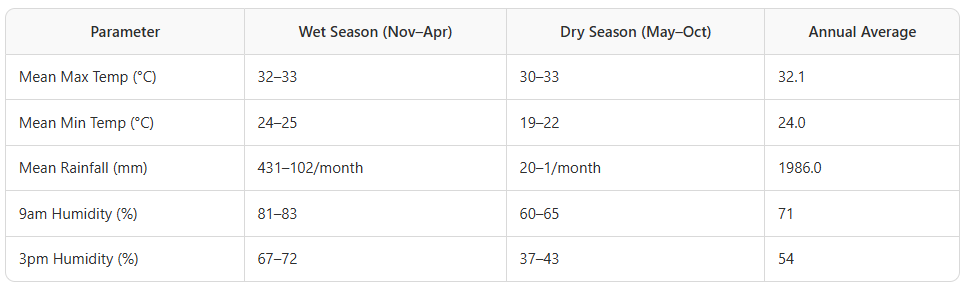
Wet Season (Nov–Apr): High temperatures, extreme humidity, and heavy rainfall. Cyclones and intense storms are common.
Dry Season (May–Oct): Warm, sunny days, cooler nights, and very little rain.
Common Grass Types
Queensland Blue Couch: Most popular, dense, resists weeds, but needs regular watering in the Dry.
Buffalo Grass: Tolerates shade, survives Dry season if watered.
Carpet Grass: Prefers moist soils, not drought-tolerant.
Seasonal Lawn Care Challenges
Wet Season: Rapid growth, frequent mowing, risk of waterlogging and fungal diseases, equipment access issues due to saturated soils.
Dry Season: Drought stress, reduced growth, increased need for irrigation.
Key Takeaway:
Darwin’s climate means lawns grow fast and thick in the Wet, but can dry out and become patchy in the Dry. Equipment must withstand high humidity, heavy rain, and potential flooding.
7. Robot Mowers in Darwin: Suitability and Challenges
So, would robot mowers work in Darwin?
Let’s break it down:
Wet Season Challenges
Rapid Growth: Lawns may need mowing more frequently than robot mowers can handle, especially after heavy rain.
Waterlogging: Wet, muddy conditions can cause robots to get stuck or damage the lawn by creating ruts.
Disease Risk: High humidity and wet grass increase the risk of fungal diseases, which robots can’t detect or treat.
Equipment Durability: High humidity accelerates rust and corrosion; persistent moisture can affect electronics and batteries.
Dry Season Challenges
Drought Stress: Lawns may go dormant or brown without irrigation; robot mowers can’t address underlying soil or irrigation issues.
Reduced Growth: Less frequent mowing needed, but robots may still run on their schedule unless adjusted.
Terrain and Layout
Complex Lawns: Many Darwin properties have uneven ground, tree roots, and garden beds—potential obstacles for robot mowers.
Grass Types: Queensland Blue Couch and Buffalo Grass are suitable for robot mowing, but only if the lawn is well-established and not patchy.
Equipment Maintenance
Corrosion Risk: High humidity and rainfall mean more frequent cleaning and maintenance to prevent rust and water damage.
Electrical Issues: Persistent moisture can cause short circuits or battery problems.
Key Finding:
Robot mowers can work in Darwin, but only on well-drained, relatively flat lawns with simple layouts. They require diligent maintenance and may struggle during the Wet season.
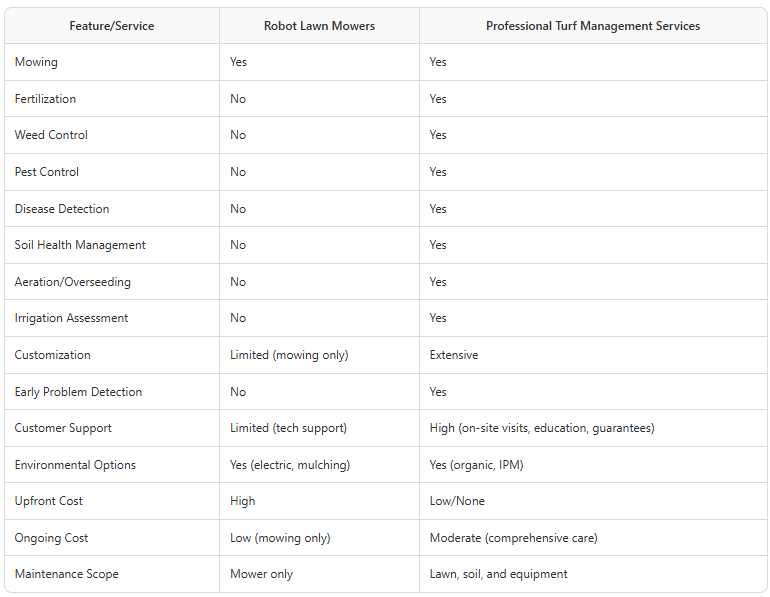
8. Traditional Lawn Care vs. Robot Mowers: A Detailed Comparison
Let’s compare robot mowers with traditional and professional lawn care services:
Key Takeaway:
Robot mowers are great for routine mowing, but they can’t replace the expertise, customization, and comprehensive care provided by professional turf management.
9. Why Professional Turf Management Still Matters
Even with the best robot mower, a healthy, beautiful lawn requires more than just regular cutting.
Here’s why professional services remain essential:
Holistic Lawn Health
Soil Testing & Fertilization: Professionals analyze soil and apply the right nutrients for your grass type and climate.
Weed & Pest Control: Targeted treatments keep invasive species and damaging insects at bay.
Disease Management: Early detection and treatment of fungal and bacterial diseases—especially important in Darwin’s humid climate.
Aeration & Overseeding: Relieves soil compaction, improves water/nutrient uptake, and thickens turf.
Expert Eyes & Custom Solutions
Diagnosis: Trained technicians spot early signs of trouble—bare patches, discoloration, or pest activity—that robots can’t detect.
Tailored Programs: Service plans are customized for your lawn’s unique needs, considering grass type, soil, shade, and seasonal challenges.
Comprehensive Maintenance
Irrigation Assessment: Ensures your system is working efficiently, especially critical during the Dry season.
Sustainable Practices: Use of organic fertilizers, integrated pest management, and eco-friendly solutions.
Higher Quality Results
Attention to Detail: Manual edging, striping, and clean-up deliver a polished, professional look.
Problem Prevention: Proactive care prevents costly issues and keeps your lawn resilient year-round.
Key Finding:
Professional turf management is about more than just mowing—it’s about creating and maintaining a healthy, resilient, and beautiful lawn that thrives in Darwin’s challenging climate.
10. The Best of Both Worlds: Combining Robot Mowers and Professional Services
So, what’s the ideal solution for Darwin homeowners and property managers? A hybrid approach.
How to Combine Robot Mowers and Professional Turf Management
Let the Robot Handle Routine Mowing
Set your robot mower to maintain grass height with frequent, light trims.
Enjoy the convenience, quiet operation, and time savings.
Schedule Regular Professional Visits
Have a turf management crew handle fertilization, weed and pest control, aeration, disease management, and irrigation checks.
Professionals can also perform manual edging, detail work, and seasonal clean-ups.
Monitor and Adjust
Work with your turf management provider to adjust mowing schedules based on seasonal growth patterns (e.g., more frequent in the Wet, less in the Dry).
Address any issues the robot can’t handle—bare patches, drainage problems, or disease outbreaks—promptly.
Maximize Lawn Health and Appearance
The robot keeps your lawn tidy between professional visits.
The turf management team ensures your lawn stays healthy, resilient, and looking its best.
Key Takeaway:
Robot mowers are a valuable tool, but they work best as part of a comprehensive lawn care strategy—one that includes professional expertise and hands-on care.
11. Conclusion: Should You Invest in a Robot Mower in Darwin?
Robot lawn mowers have come a long way, offering real convenience, consistent mowing, and eco-friendly operation.
In Darwin, they can be a great addition for properties with well-drained, relatively flat lawns and simple layouts. However, the Wet season’s heavy rains, rapid growth, and disease risks, combined with the Dry season’s drought stress, mean that robot mowers alone are not enough for a truly healthy, resilient lawn.
Professional turf management remains essential—not just for mowing, but for the full spectrum of lawn health: soil care, fertilization, weed and pest control, disease management, and expert advice tailored to Darwin’s unique climate.
Robot mowers: Great for routine mowing, time savings, and quiet operation.
Limitations: Struggle with complex terrain, wet conditions, and can’t address underlying lawn health.
Professional services: Provide comprehensive care, expert diagnosis, and higher quality results.
Best approach: Combine robot mowing with regular professional turf management for the healthiest, best-looking lawn in Darwin, Palmerston and Humpty Doo.
About Us
At Quality Garden Services NT, we’re passionate about healthy soils and vibrant landscapes in Darwin. From turf management and grounds maintenance to garden renovations and soil health advice, our expert team is here to help you achieve your green goals—no matter the season.
Quality Garden Services NT provides comprehensive services including lawn care, pruning, weed control, mulching, turf management and irrigation checks, all tailored to your property’s specific needs. Our team of experienced professionals is dedicated to keeping your property in top condition year-round, regardless of the season. We’re not just about making your garden look good—we’re about creating a lasting impression for your clients, residents, and visitors.
If you’re in Darwin, Palmerston, Humpty Doo or the rural areas and looking for reliable, trusted garden & grounds maintenance services, look no further than Quality Garden Services NT.
We specialize in turf management, grounds maintenance, and garden care in Darwin and the Northern Territory.
Contact us today (0498649535) to learn more about how wetting agents can transform your lawn!
At Quality Garden Services NT, we understand how important it is to maintain a lush, healthy lawn and vibrant garden in Darwin’s unique climate.
Why Choose Us?
Choosing the right grounds maintenance and gardening service is crucial for the health and appearance of your property. Here’s why we stand out:
Local Expertise: Our team is familiar with the unique climate and soil conditions of the Darwin, Palmerston, Humpty Doo and surrounding areas. We know what works best for your gardens and lawns.
Quality Service: We are committed to delivering high-quality work. Our goal is to exceed your expectations, leaving you with well-maintained outdoor spaces.
Customer Satisfaction: Your satisfaction is our priority. We take the time to listen to your needs and tailor our services accordingly - be it for commercial or private properties.
Thank you for visiting our website!