
Bees in Darwin – A Sweet Surprise
Quality Garden Services NT - Your trusted partner in creating lush, thriving outdoor spaces in the Northern Territory.
European honey bees have become an unexpected yet vital part of Darwin’s tropical landscape, thriving alongside a rich diversity of native bees. Their presence brings a “sweet surprise” to gardens, parks, and urban spaces, supporting pollination, biodiversity, and the productivity of our unique Top End environment.
Table of Contents
1) Introduction: The Buzz About Bees in Darwin
2) A Brief History: How European Honey Bees Came to the Top End
3) Life in the Tropics: European Honey Bees in Darwin
Adapting to the Heat and Wet Season
What Do Bees Eat in Darwin?
Foraging Patterns and Urban Gardens
4) The Benefits: Why Bees Matter to Every Garden
Pollination Power
Economic and Ecological Value
Bees and Urban Biodiversity
5) Native Bees: Darwin’s Unsung Pollinators
Meet the Locals: Blue-banded, Teddy Bear, and Stingless Bees
Native vs. European Bees: A Comparison
Supporting Native Bees in Your Garden
6) Professional Insights: Beekeeping and Garden Management in Darwin
Practical Tips for Bee-Friendly Gardens
Managing Hives in the Tropics
Common Challenges and Solutions
7) Conclusion: Embracing the Sweet Surprise
8) References
1. Introduction: The Buzz About Bees in Darwin
If you’ve ever wandered through a Darwin, Palmerston or Humpty Doo garden in the early morning, you’ve likely heard the gentle hum of bees at work. In the heart of Australia’s tropical north, bees are more than just honey-makers—they’re essential partners in keeping our gardens, parks, and landscapes vibrant and productive.
As a turf management and garden maintenance business owner in Darwin, I’ve seen firsthand how bees—both European and native—bring life and abundance to our unique environment.
But how did European honey bees, originally from temperate Europe, become such a fixture in the Top End? What do they eat, and how do they survive our intense heat and monsoonal rains? And what about our native bees—how do they fit into the picture?
Let’s take a deep dive into the world of bees in Darwin, and discover why their presence is truly a “sweet surprise.”
2. A Brief History: How European Honey Bees Came to the Top End
The Journey from Europe to Australia
European honey bees (Apis mellifera) were first introduced to Australia in 1822 by European settlers, who brought them for honey production and to pollinate crops and fruit trees. As settlement spread across the continent, so did the bees, with feral populations establishing themselves in the wild, especially in the southern states.
Arrival in the Northern Territory
The expansion of European settlement and agriculture into the Northern Territory (NT) in the late 19th and early 20th centuries saw honey bees gradually introduced to the Top End. Darwin, as a growing service and agricultural hub, needed bees for both honey and pollination. By the early 20th century, European honey bees were a common sight in Darwin’s gardens, bushland, and farms.
Key Finding:
European honey bees have been part of Darwin’s landscape for over a century, adapting to the region’s unique climate and flora.
3. Life in the Tropics: European Honey Bees in Darwin
Adapting to the Heat and Wet Season
Darwin’s climate is famously challenging: hot, humid, and marked by a dramatic wet season (November–April) and a dry season (May–October). For European honey bees, this means adapting to conditions very different from their native range.
How Bees Beat the Heat
Thermoregulation: Bees maintain their brood nest at 34–36°C, even when outside temperatures soar. They do this by fanning their wings to circulate air and by collecting water, which they spread on the combs for evaporative cooling.
Water Collection: During the hottest months, bees increase water foraging, often visiting garden taps, birdbaths, or pools.
Bearding: On extremely hot days, bees may cluster outside the hive entrance to reduce internal heat load—a behavior known as “bearding.”
Hive Placement: In Darwin, hives are best placed in shaded, well-ventilated spots to minimize heat stress.
Surviving the Wet Season
Brood Reduction: Heavy rains and high humidity can limit foraging and flowering. Colonies often reduce brood production, and worker bees live longer to sustain the colony until resources return.
Moisture Management: Bees increase ventilation and remove excess water from nectar to prevent fungal diseases, which thrive in humid conditions.
Supplemental Feeding: Beekeepers may need to provide sugar syrup or pollen substitutes during periods of floral scarcity.
Key Takeaway:
European honey bees in Darwin have developed remarkable strategies to survive both the searing heat and the monsoonal rains, making them true tropical survivors.
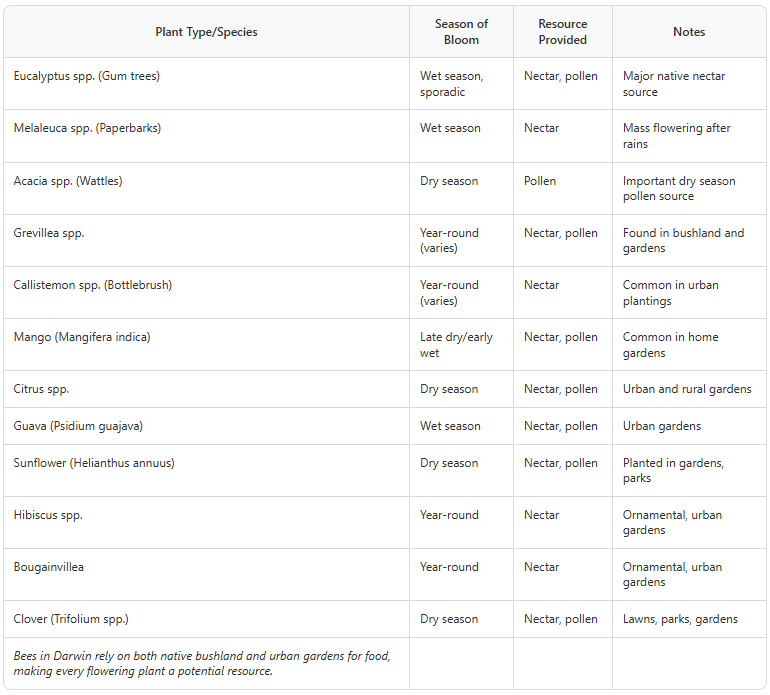
What Do Bees Eat in Darwin?
Darwin’s bees are not picky eaters—they’re generalists, foraging on a wide variety of native and introduced plants. Their diet changes with the seasons and the availability of flowers.
Major Food Sources
Foraging Patterns and Urban Gardens
Flexible Foraging: Bees adjust their activity to the availability of flowers and the weather. They’re most active in the cooler parts of the day—early morning and late afternoon.
Urban Support: The diversity of plants in Darwin’s gardens, parks, and streetscapes ensures bees have food year-round, even when native bushland is between flowering cycles.
Water Needs: Bees need water for cooling the hive, especially during the dry season. Providing shallow water sources in your garden can help support local bee populations.
Pro Tip:
Planting a mix of native and exotic flowering plants, and ensuring a water source, can make your garden a bee haven all year round.
4. The Benefits: Why Bees Matter to Every Garden
Pollination Power
European honey bees are superstar pollinators. Their ability to visit thousands of flowers each day means they play a crucial role in:
Fruit and Vegetable Production: Bees are essential for pollinating mangoes, citrus, passionfruit, tomatoes, and many other crops grown in Darwin gardens.
Ornamental Gardens: Many flowering plants, from hibiscus to grevillea, set more blooms and seeds when pollinated by bees.
Native Flora: While not as specialized as some native bees, honey bees still contribute to the pollination of many native trees and shrubs.
Economic and Ecological Value
Increased Yields: Bee-pollinated plants produce more and better-quality fruit and seeds, boosting productivity for home gardeners and commercial growers alike.
Reduced Maintenance: Natural pollination means less need for manual pollination or replanting, saving time and money.
Ecosystem Services: Bees support the health of urban green spaces, which in turn provide habitat for birds, insects, and other wildlife.
Bees and Urban Biodiversity
Supporting Wildlife: By pollinating a wide range of plants, bees help maintain the diversity of urban flora, which supports a web of other species.
Resilience: Healthy bee populations make urban ecosystems more resilient to pests, diseases, and environmental changes.
Key Finding:
Every garden in Darwin benefits from bees—whether you’re growing mangoes, maintaining a lush lawn, or simply enjoying the beauty of flowering plants.
5. Native Bees: Darwin’s Unsung Pollinators
While European honey bees get most of the attention, Darwin is home to a dazzling array of native bees—over 1,700 species across Australia, with many found right here in the Top End.
Meet the Locals: Blue-banded, Teddy Bear, and Stingless Bees
Blue-banded Bees (Amegilla cingulata): Striking with their blue stripes, these solitary bees are famous for “buzz pollination”—a technique essential for crops like tomatoes and eggplants.
Teddy Bear Bees (Amegilla bombiformis): Furry, brown, and gentle, these solitary bees nest in shallow burrows and are important pollinators of native flowers.
Stingless Bees (Tetragonula and Austroplebeia spp.): Tiny, social bees that form colonies in tree hollows. They produce small amounts of tangy honey and are increasingly used for crop pollination in the tropics.
Native vs. European Bees: A Comparison

Key Takeaway:
Native bees are essential for pollinating certain native and exotic plants that honey bees can’t, making them irreplaceable partners in Darwin’s gardens.
Supporting Native Bees in Your Garden
Plant Native Flora: Grevillea, melaleuca, and acacia are favorites for native bees.
Provide Nesting Sites: Bee hotels, bare patches of soil, and preserving old logs or tree hollows can help native bees find a home.
Avoid Pesticides: Many chemicals harm both honey bees and native bees—choose bee-friendly alternatives.
6. Professional Insights: Beekeeping and Garden Management in Darwin
As a garden maintenance professional in Darwin, I’ve learned that supporting bees—both European and native—is one of the best ways to ensure healthy, productive, and beautiful landscapes.
Practical Tips for Bee-Friendly Gardens
Diversity is Key: Plant a mix of flowering species that bloom at different times of year to provide continuous food for bees.
Water Matters: Place shallow dishes of water with pebbles or floating corks for bees to land on.
Go Native: Incorporate native plants to support both native and honey bees.
Reduce Chemicals: Use organic or bee-safe pest control methods.
Managing Hives in the Tropics
Shade and Ventilation: Place hives in shaded, breezy spots to reduce heat stress.
Monitor for Pests: The warm, humid climate can encourage pests like the small hive beetle—regular inspections are essential.
Supplemental Feeding: Be prepared to feed bees during the wet season when flowers are scarce.
Swarm Management: With year-round activity, beekeepers must watch for signs of swarming, especially in the dry season.
Common Challenges and Solutions
Heat Stress: Provide shade, water, and ventilation for hives.
Wet Season Starvation: Supplement with sugar syrup or pollen substitutes if needed.
Disease and Pests: Practice good hive hygiene and remove diseased brood promptly.
Habitat Loss: Advocate for the preservation of bushland and old trees, which provide nesting sites for both honey bees and native bees.
Pro Insight:
In Darwin, a little extra care goes a long way—healthy bees mean healthy gardens, and vice versa.
7. Conclusion: Embracing the Sweet Surprise
Summary Box:
European honey bees have thrived in Darwin for over a century, adapting to the region’s heat, humidity, and seasonal cycles.
They feed on a diverse array of native and exotic plants, with urban gardens playing a crucial role in their survival.
Bees are essential for pollination, supporting both food production and biodiversity in the Top End.
Darwin’s native bees add to the region’s ecological richness, offering unique pollination services.
By creating bee-friendly gardens and supporting both honey bees and native bees, we can all enjoy the “sweet surprise” of a thriving, buzzing Darwin.
Bees in Darwin are more than just honey-makers—they’re the unsung heroes of our gardens, parks, and landscapes. European honey bees, with their adaptability and industrious nature, have become an integral part of the Top End’s ecology, thriving alongside a rich diversity of native bees. Together, they pollinate our crops, support our native flora, and bring life to every corner of our city.
As a turf management and garden maintenance business, we see the benefits of bees every day: lush lawns, abundant fruit, vibrant flowers, and a thriving urban ecosystem. By understanding and supporting both European and native bees, we can ensure that Darwin remains a “sweet surprise” for generations to come.
So next time you hear that familiar buzz in your garden, take a moment to appreciate the incredible journey and hard work of our local bees. They truly are the heartbeat of the Top End.
About Us
At Quality Garden Services NT, we’re passionate about healthy soils and vibrant landscapes in Darwin. From turf management and grounds maintenance to garden renovations and soil health advice, our expert team is here to help you achieve your green goals—no matter the season.
Quality Garden Services NT provides comprehensive services including lawn care, pruning, weed control, mulching, turf management and irrigation checks, all tailored to your property’s specific needs. Our team of experienced professionals is dedicated to keeping your property in top condition year-round, regardless of the season. We’re not just about making your garden look good—we’re about creating a lasting impression for your clients, residents, and visitors.
If you’re in Darwin, Palmerston, Humpty Doo or the rural areas and looking for reliable, trusted garden & grounds maintenance services, look no further than Quality Garden Services NT.
We specialize in turf management, grounds maintenance, and garden care in Darwin and the Northern Territory.
Contact us today (0498649535) to learn more about how wetting agents can transform your lawn!
At Quality Garden Services NT, we understand how important it is to maintain a lush, healthy lawn and vibrant garden in Darwin’s unique climate.
Why Choose Us?
Choosing the right grounds maintenance and gardening service is crucial for the health and appearance of your property. Here’s why we stand out:
Local Expertise: Our team is familiar with the unique climate and soil conditions of the Darwin, Palmerston, Humpty Doo and surrounding areas. We know what works best for your gardens and lawns.
Quality Service: We are committed to delivering high-quality work. Our goal is to exceed your expectations, leaving you with well-maintained outdoor spaces.
Customer Satisfaction: Your satisfaction is our priority. We take the time to listen to your needs and tailor our services accordingly - be it for commercial or private properties.
Thank you for visiting our website!