
How to Help Your Lawn and Soil Recover from a Long and Heavy Wet Season in Darwin
Quality Garden Services NT - Your trusted partner in creating lush, thriving outdoor spaces in the Northern Territory.
After Darwin’s record-breaking 2025–2026 wet season—with historic rainfall, widespread flooding, and unprecedented soil moisture—your lawn and soil need a carefully planned recovery to thrive in the coming dry season. This comprehensive guide, from Darwin’s leading turf management experts (Quality Garden Services NT), covers everything you need to know: from understanding local grass and soil types, to step-by-step recovery actions, advanced professional solutions, and a tailored seasonal timing guide.
Ready to restore your lawn’s health? Trust local expertise—book a professional assessment with us today!
Table of Contents
Introduction: The 2025–2026 Wet Season in Darwin, Palmerston and Humpty Doo
What the Wet Season Does to Darwin Lawns and Soils
Common Turf Grass Species and Their Wet Season Vulnerabilities
Darwin’s Soil Types and Wet Season Effects
Step-by-Step Recovery Guide
Initial Assessment and Debris Removal
Aeration: Core and Liquid Methods
Dethatching and Scarifying
Soil Amendment Strategies
Topdressing Techniques](#topdressing)
Fertilisation Programs](#fertilisation)
Weed and Pest Management
Re-Seeding and Re-Turfing Severely Damaged Areas
Professional and Advanced Turf Management Solutions
Timing Guide: Wet-to-Dry Season Transition in Darwin
Conclusion & Call to Action: Why Choose Our Turf Management Team
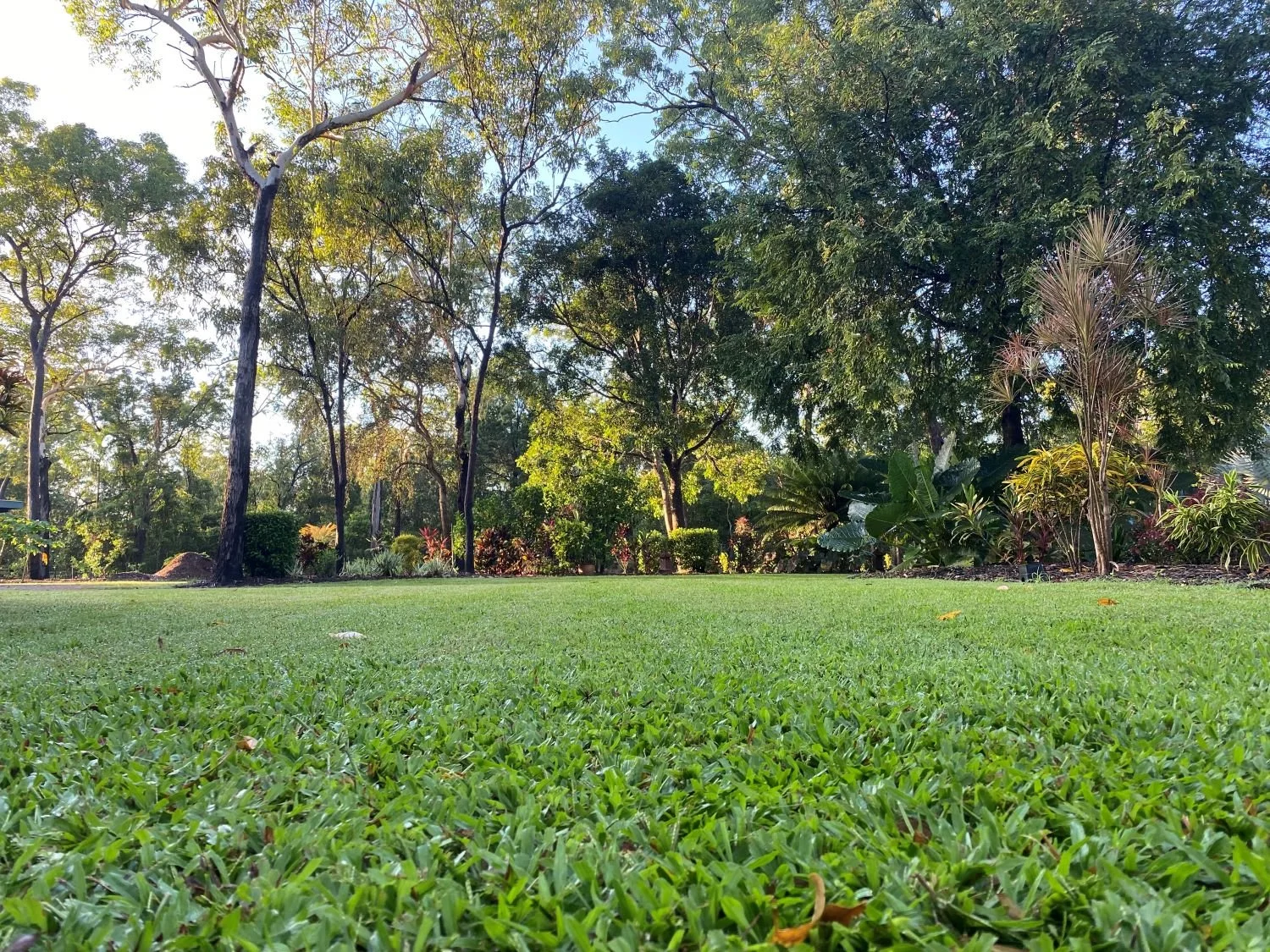
Introduction: The 2025–2026 Wet Season in Darwin, Palmerston and Humpty Doo
Darwin and the Top End have always been defined by their dramatic wet and dry seasons, but the 2025–2026 wet season was truly one for the record books. According to the Bureau of Meteorology, Darwin Airport recorded a staggering 2297.8 mm of rainfall—that’s 133% of the long-term average—with some areas like Middle Point experiencing a single-day deluge of 430 mm. Severe Tropical Cyclone Fina and a series of tropical lows brought relentless rain, pushing soil moisture to the highest levels ever recorded in parts of the region.The impacts were felt everywhere:
Flooding forced evacuations in Daly River, Palumpa, and Katherine, with the Stuart Highway closed and communities cut off for weeks.
Homes and businesses suffered water damage, while lawns and gardens were left waterlogged, compacted, and vulnerable to disease.
Soil health was challenged by nutrient leaching, compaction, and erosion, setting the stage for a tough transition into the dry season.
If your lawn looks battered, patchy, or overrun with weeds and pests, you’re not alone. But with the right recovery plan—tailored to Darwin’s unique climate, grass species, and soils—you can restore your lawn’s health and resilience for the dry months ahead.
What the Wet Season Does to Darwin Lawns and Soils
Common Turf Grass Species and Their Wet Season Vulnerabilities
Darwin’s lawns are as diverse as its people, but most are planted with warm-season grasses adapted to the tropics. Here’s how each major species fared during the record wet:

Buffalo and Couch lawns often developed yellow patches, thinning, or even bare spots due to root suffocation and fungal diseases.
Kikuyu and Bahia generally coped well, but even these tough grasses can succumb to disease if waterlogged for weeks.
Carpet Grass and Queensland Blue Couch struggled in low-lying, poorly drained areas, with shallow roots making them vulnerable to rot.
Key Finding:
All turf species in Darwin are at increased risk of fungal diseases (like Pythium Blight and Brown Patch) and root rot after prolonged waterlogging and humidity.
Darwin’s Soil Types and Wet Season Effects
Darwin’s soils are as varied as its landscapes. Here’s how the main types responded to the wettest season in decades:

Clay-heavy soils became waterlogged and compacted, suffocating roots and making recovery difficult.
Sandy soils drained quickly but lost nutrients, leaving lawns hungry and pale.
Lateritic soils generally coped well but suffered surface erosion and compaction in high-traffic or sloped areas.
Step-by-Step Recovery Guide
1. Initial Assessment and Debris Removal
Why it matters:
Floodwaters and heavy rain leave behind silt, debris, and sometimes contaminants. Acting too soon can do more harm than good.
Action Steps:
Wait for water to drain naturally. Avoid walking or working on saturated soil to prevent further compaction and root damage.
Remove debris: Clear away silt, leaves, branches, and any non-biodegradable materials. Use a rake, blower, or mower with a catcher for fine debris.
Check for hazards: Watch for sharp objects, glass, or contamination (especially in flood-prone areas).
Pro Tip:
If your lawn was under water for more than 4–5 days, expect some turf loss and be prepared for more intensive recovery steps.
2. Aeration: Core and Liquid Methods
Why it matters:
Waterlogged soils become compacted, starving roots of oxygen and making it hard for water to drain as the dry season approaches.
Core Aeration
When: Once the soil is moist but not saturated (usually early dry season, April–May).
How: Use a core aerator to remove plugs of soil (5–10 cm deep). Two passes are ideal for flood-affected lawns.
Benefits: Relieves compaction, improves oxygenation, and helps roots recover.
Liquid Aeration
When: As a supplement to core aeration, especially in areas where machinery can’t reach.
How: Apply commercial liquid aerators containing surfactants and soil-penetrating agents.
Benefits: Helps break up compacted layers and improves water movement.
Key Finding:
Professional aeration equipment achieves deeper, more uniform results—especially important after a record wet season.
3. Dethatching and Scarifying
Why it matters:
Thatch (a layer of dead roots and stems) builds up quickly in humid, wet conditions, harboring disease and blocking water infiltration.
Action Steps:
Dethatch only when the lawn is actively recovering and the soil is not waterlogged.
Use a dethatching rake or mechanical scarifier for small lawns; hire a professional for large or heavily thatched areas.
Remove all debris after dethatching to prevent disease.
Pro Tip:
Power dethatching is best left to professionals for large or heavily compacted lawns.
4. Soil Amendment Strategies
Why it matters:
Flooding and heavy rain strip soils of nutrients, disrupt pH, and can leave clay soils even more compacted.
Gypsum (for Clay Soils)
Purpose: Breaks up clay, improves drainage, and reduces compaction.
How: Apply after aeration for best results.
Organic Matter and Compost
Purpose: Restores soil biology, improves structure, and helps retain nutrients.
How: Topdress with well-composted organic matter, especially over bare or thin areas.
pH Testing and Correction
Why: Heavy rain can acidify soils, making nutrients less available.
How: Test soil pH; apply lime if too acidic, or sulfur if too alkaline.
Key Finding:
Soil testing is essential for targeted amendments—don’t guess, test!
5. Topdressing Techniques
Why it matters:
Topdressing levels minor depressions, improves drainage, and supports new growth.
Action Steps:
Materials: Use clean, washed river sand or a sand-compost blend.
When: After aeration and dethatching, once the lawn is actively growing and the soil is drying out.
How: Spread a thin (5–10 mm) layer evenly, then rake or brush in.
Pro Tip:
Avoid heavy topdressing on waterlogged or dormant lawns—it can smother grass and delay recovery.
6. Fertilisation Programs
Why it matters:
Nutrients are leached from the soil during heavy rain, leaving lawns hungry and slow to recover.
Timing
Wait until the lawn is drying out and showing new growth (usually April–May).
Do not fertilise waterlogged or dormant lawns—it’s a waste and can cause further stress.
Product Selection
Slow-release granular NPK fertilisers (e.g., 10-10-10 or 13-13-13) are ideal for steady recovery.
Controlled-release nitrogen (CRN) products (e.g., Maintain, Maintain Mini, Turfmaxx) offer sustained feeding and reduce mowing frequency.
Tailor your program based on soil test results for best results.
Application Tips
Apply after aeration and topdressing for maximum uptake.
Water in well to avoid burning and ensure nutrients reach the roots.
Key Finding:
Professional fertilisation programs, based on soil testing, deliver better results and avoid over- or under-feeding.
7. Weed and Pest Management
Weeds
Hand weeding: Start with manual removal or spot treatment of visible weeds.
Pre-emergent herbicides: Apply products like Oxa-Pro or Oxafert as the soil dries and before new weed growth.
Post-emergent herbicides: Use selective products for established broadleaf weeds, but avoid on newly seeded or sodded areas.
Pests
Army worms and lawn grubs: Monitor for increased activity post-flooding; treat with appropriate insecticides if needed.
Fungal diseases: Watch for brown patch, Pythium blight, and other symptoms in persistently wet areas. Aeration helps, but fungicide applications may be necessary if symptoms persist.
Pro Tip:
Integrated pest and weed management, combining cultural, chemical, and biological controls, is the most effective approach.
Re-Seeding and Re-Turfing Severely Damaged Areas
When to Re-Seed or Re-Turf:
If large areas are dead, bare, or infested with weeds after the wet season, overseeding or re-turfing is the best solution.
Overseeding
Timing: Early dry season (April–May), once the soil is drying and temperatures are suitable for germination.
Grass Selection: Choose varieties suited to Darwin’s climate—Couch, Buffalo, or Zoysia for warm-season resilience.
Preparation: Rake or lightly topdress to ensure good seed-to-soil contact.
Watering: Irrigate early in the morning to a depth of 6–8 inches to encourage deep rooting.
Re-Turfing
When: For large, dead, or severely damaged areas.
Preparation: Remove all dead material, level the soil, and amend as needed before laying new turf.
Aftercare: Water regularly until established, then transition to deep, infrequent watering as the dry season progresses.
Key Finding:
Professional turf installation ensures correct soil preparation, turf selection, and establishment for long-term success.
Professional and Advanced Turf Management Solutions
Why Choose Professional Help?
DIY can only go so far—Darwin’s unique climate and soils demand expert knowledge, advanced tools, and tailored solutions.
Comprehensive Soil Testing and Analysis
What: Laboratory testing for pH, nutrient levels, salinity, and soil structure.
Why: Guides precise amendment and fertilisation strategies, saving time and money.
Biological Soil Treatments
What: Products like liquid seaweed, humic acids, and microbial inoculants.
Why: Enhance soil microbial activity, boost resilience, and improve nutrient cycling.
Specialised Drainage Solutions
What: French drains, swales, subsurface drainage systems.
Why: Permanent fixes for chronic waterlogging and poor drainage.
Integrated Turf Renovation Programs
What: A combination of aeration, dethatching, topdressing, overseeding, and targeted fertilisation.
Why: Delivers a holistic recovery, tailored to your lawn’s specific needs.
Ongoing Professional Monitoring
What: Regular site visits, soil testing, pest and disease monitoring, and seasonal adjustments.
Why: Ensures long-term turf health and resilience, catching problems before they escalate.
Key Finding:
Our Darwin-based turf management team offers all these advanced services—backed by local expertise and the latest research.
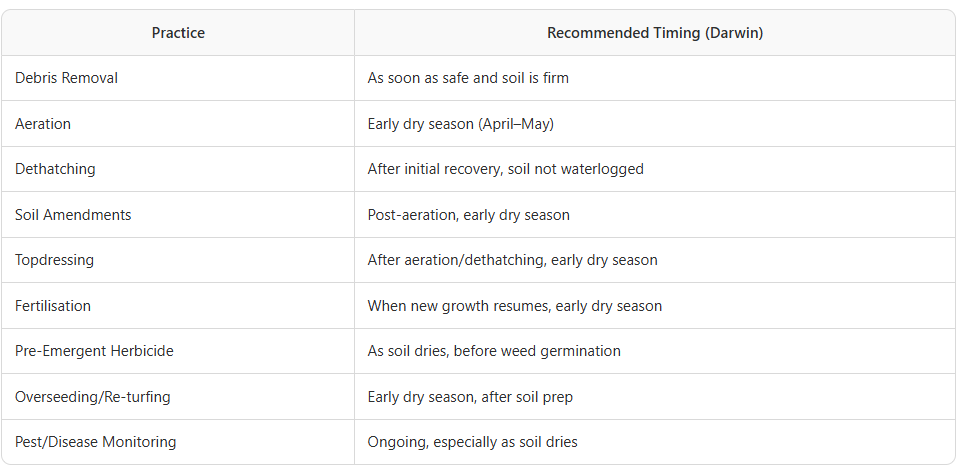
Timing Guide: Wet-to-Dry Season Transition in Darwin
Conclusion & Call to Action: Why Choose Our Darwin Turf Management Team
Key Takeaway:
The 2025–2026 wet season was unlike any Darwin has seen in decades. Your lawn and soil have endured record rainfall, flooding, and unprecedented stress. Recovery isn’t just about mowing and watering—it’s about understanding local grass species, soil types, and the unique challenges of the Top End climate.
Our turf management, grounds, and garden maintenance business is Darwin’s trusted expert in post-wet season recovery.
We offer:
Comprehensive soil testing and tailored amendment programs
Professional aeration, dethatching, and topdressing
Advanced fertilisation and biological soil treatments
Integrated weed, pest, and disease management
Specialised drainage solutions and turf renovation
Ongoing monitoring and seasonal care
Don’t leave your lawn’s recovery to chance.
Book a professional lawn assessment with our local team today and give your turf the expert care it deserves.
Contact us now for a healthier, greener, and more resilient lawn—ready to thrive in Darwin’s dry season and beyond!
About Us
At Quality Garden Services NT, we’re passionate about healthy soils and vibrant landscapes in Darwin. From turf management and grounds maintenance to garden renovations and soil health advice, our expert team is here to help you achieve your green goals—no matter the season.
If you’re in Darwin, Palmerston, Humpty Doo or the rural areas and looking for reliable, trusted garden & grounds maintenance services, look no further than Quality Garden Services NT.
We specialize in turf management, grounds maintenance, and garden care in Darwin and the Northern Territory.
Contact us today (0498649535) to learn more about how wetting agents can transform your lawn!
At Quality Garden Services NT, we understand how important it is to maintain a lush, healthy lawn and vibrant garden in Darwin’s unique climate.
Why Choose Us?
Choosing the right grounds maintenance and gardening service is crucial for the health and appearance of your property. Here’s why we stand out:
Local Expertise: Our team is familiar with the unique climate and soil conditions of the Darwin, Palmerston, Humpty Doo and surrounding areas. We know what works best for your gardens and lawns.
Quality Service: We are committed to delivering high-quality work. Our goal is to exceed your expectations, leaving you with well-maintained outdoor spaces.
Customer Satisfaction: Your satisfaction is our priority. We take the time to listen to your needs and tailor our services accordingly - be it for commercial or private properties.
Thank you for visiting our website!