
Other Countries with Similar Tropical Climates: What Are They Doing with Their Gardens and Lawns?
Quality Garden Services NT - Your trusted partner in creating lush, thriving outdoor spaces in the Northern Territory.
Around the tropical world, home and property owners face the same challenges as we do in Darwin—heat, humidity, wild wet seasons, and relentless weeds. But from Singapore’s sky gardens to Florida’s “Florida-Friendly” lawns, there’s a wealth of inspiration and practical ideas for making our own gardens and lawns thrive as the wet season ends and the dry approaches.
Introduction: Darwin’s Wet Season Winds Down—What Can We Learn from the Tropics?
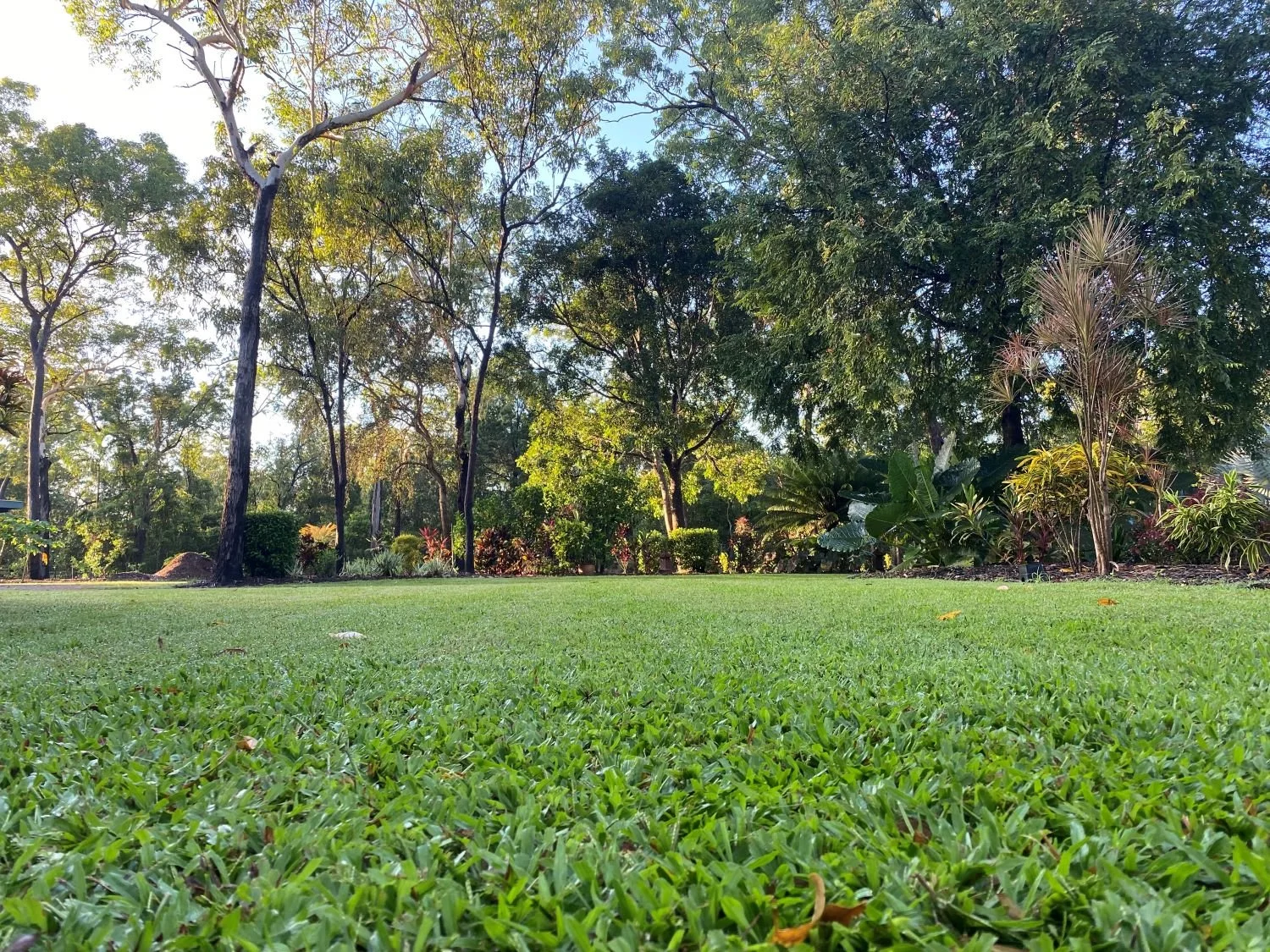
As mid-March rolls around in Darwin, Palmerston and Humpty Doo, the air is thick with the last of the wet season’s humidity, and the landscape is a riot of green. Lawns are lush, gardens are bursting, and the soil is still heavy with moisture from months of monsoonal rain.
For those of us in the turf management and garden maintenance business, this is a time of both opportunity and challenge: the weeds are rampant, fungal diseases lurk in the damp, and the transition to the dry season is just around the corner.
But here’s the thing—Darwin isn’t alone. Across the globe, from the bustling streets of Singapore to the sun-drenched lawns of Florida, from the Caribbean’s palm-fringed gardens to the volcanic soils of Hawaii, people are tending gardens and lawns in climates just as tropical as ours. They’re facing the same battles with weeds, the same struggles with waterlogging and rapid growth, and the same need to adapt as the seasons shift.
So, what are our tropical cousins doing with their gardens and lawns? What grasses do they plant, how do they manage weeds, and what innovative ideas can we borrow as we prepare for the dry? Let’s take a tour of the world’s tropics and see what lessons we can bring home to Darwin.
Setting the Scene: Darwin’s Tropical Benchmark
Before we jet off on our global garden tour, let’s quickly recap what makes Darwin’s climate—and our gardening challenges—unique:
Climate: Classic tropical savanna (Köppen Aw), with a dramatic wet season (November–April) and a dry, sunny winter (May–October).
Wet Season: High humidity (often 80%+), monsoonal rains (1,570–1,830 mm/year), rapid plant growth, waterlogging, and increased weed and disease pressure.
Dry Season: Warm, low humidity, little to no rain, slower growth, and the need for irrigation.
Popular Turf Grasses: Buffalo (Sir Walter), Couch, Zoysia—chosen for their resilience to heat, humidity, and wear.
Common Garden Plants: Frangipani, hibiscus, bougainvillea, palms, mango, banana, and native species like grevilleas.
Key Challenges: Waterlogged soils, rampant weeds (nutgrass, crabgrass, broadleaf invaders), fungal diseases, and thatch build-up after the wet.
As the wet season ends in mid-March, lawns and gardens are at their most vigorous—but also at their most vulnerable. It’s a critical time for aeration, dethatching, weed control, and preparing for the long, dry months ahead.
Tropical Southeast Asia: Lush Lawns, Layered Gardens, and Skyrise Greenery
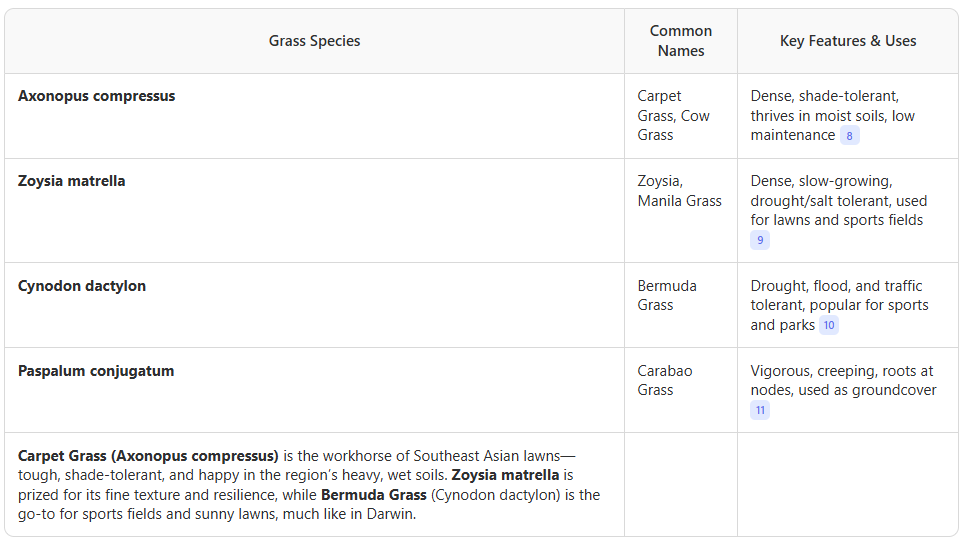
The Grasses of Southeast Asia
In the steamy cities and villages of Singapore, Malaysia, Thailand, and Indonesia, lawns are a familiar sight—but the grass underfoot is often different from what we see in Darwin:
Ornamental Gardens: A Riot of Colour and Foliage
Southeast Asian gardens are a feast for the senses, with a focus on:
Layered Planting: Mimicking the rainforest, gardens are densely planted with a mix of trees, shrubs, and groundcovers.
Iconic Trees: Rain Tree (Samanea saman), Angsana (Pterocarpus indicus), Sea Almond (Terminalia catappa), and Mahogany (Swietenia macrophylla) provide shade and structure.
Foliage and Flowering Plants: Elephant Ears (Colocasia, Alocasia), bromeliads (Guzmania), Star Jasmine (Jasminum multiflorum), Peace Lily (Spathiphyllum), and vibrant Celosia.
Water Features: Ponds and water gardens are common, reflecting the region’s abundant rainfall.
Weed Management: The Battle with Lalang and Friends
The biggest weed headache? Imperata cylindrica (Lalang or Cogon Grass)—a tall, invasive grass that can quickly take over lawns and gardens. Other common weeds include wild sugarcane and various sedges.
Control Strategies:
Manual Weeding: Still widely practiced, especially in home gardens and community spaces.
Mulching: Organic mulches suppress weeds and retain soil moisture.
Herbicides: Used selectively in larger landscapes, with care to avoid damaging desirable turf.
Cover Crops: Leguminous cover crops are used in plantations to suppress weeds and improve soil.
Innovation: Singapore’s Skyrise Greenery and Community Gardens
Singapore is a global leader in urban greening:
Rooftop Gardens: Over 100 hectares of rooftop greenery, supported by government incentives and the LEAF framework.
Community Gardens: Residents cultivate vegetables, herbs, and ornamentals in shared spaces, fostering community spirit and food security.
Botanic Gardens: The Singapore Botanic Gardens is a UNESCO World Heritage Site and a hub for horticultural research and innovation.
Heritage Trees: Mature, significant trees are protected as green landmarks.
Design Philosophy:
Dense, layered plantings, use of native species, and integration of water features and foliage gardens create lush, resilient landscapes that thrive in the tropical climate.
The Americas and the Caribbean: From Florida’s Lawns to Caribbean Palms
Florida: The “Florida-Friendly” Approach
Florida’s climate—humid, hot, and prone to summer downpours—mirrors Darwin’s in many ways. Here’s how they manage their lawns and gardens:

Right Plant, Right Place: Selecting turf and ornamentals suited to local conditions.
Efficient Irrigation: Drip systems, rain sensors, and drought-tolerant species reduce water use.
Mulching: Universal in garden beds to suppress weeds and conserve moisture.
Integrated Pest Management (IPM): Regular monitoring, beneficial insects, and minimal pesticide use.
Education: Extensive outreach to homeowners and professionals.
The Caribbean and Central America: Lush Lawns and Iconic Palms
Across the Caribbean, Costa Rica, and Panama, lawns and gardens feature:
Turf Grasses: Bermuda, Centipede, Seashore Paspalum (salt-tolerant), Zoysia, and Bahiagrass.
Ornamentals: Plumeria (Frangipani), Moringa, Coconut Palm, Lagerstroemia (Queen’s Crape Myrtle), and a variety of native palms.
Weed Management: Mulching, manual removal, selective herbicide use, and occasional cover crops.
Sustainability Trends: Increasing use of native plants, reduced turf areas, composting, and wildlife habitat creation.
Tropical South America: Brazil and Colombia
Lawns: Bermuda, Zoysia, and Paspalum are common, chosen for their resilience to heat and humidity.
Gardens: Emphasis on native species, mixed plantings, and sustainable landscaping to reduce maintenance and support biodiversity.
Weed Control: Mulching, manual removal, and integrated pest management are standard.
The Pacific Islands: Native Plants, Rain Gardens, and Community Action
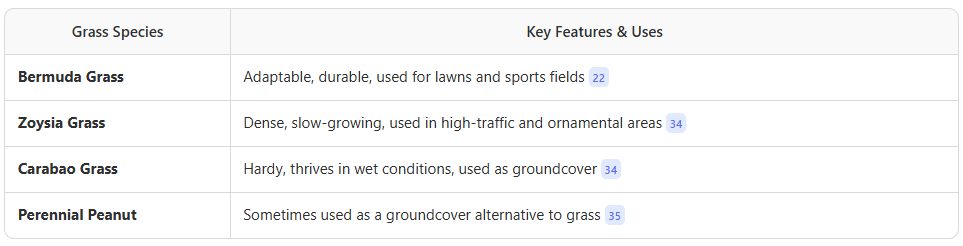
Hawaii, Fiji, Papua New Guinea: Turf and Groundcovers
Gardens and Landscaping
Native and Endemic Species: Increasingly used to reduce invasive species problems and support local biodiversity.
Rain Gardens and Xeriscaping: Designed to manage stormwater and reduce irrigation needs.
Community Weed Management: Cooperative programs tackle invasive weeds in public and private spaces.
Weed Management
Manual and Mechanical Control: Essential due to rapid weed growth in tropical conditions.
Mulching and Soil Improvement: Used to suppress weeds and improve soil health.
Native Plantings: Outcompete invasives and reduce maintenance.
Tropical Weed Management: Global Challenges and Solutions
The Worst Offenders
Across the tropics, certain weeds are notorious for their persistence and invasiveness:

Herbicide Options
Preemergence: Pendimethalin, prodiamine, dithiopyr, oxadiazon—applied before weed seeds germinate, especially at the start of the wet season.
Postemergence: Halosulfuron (Sedgehammer) for nutsedge, 2,4-D for broadleaves, glyphosate for spot treatments, MSMA for grassy weeds.
Note: Always match herbicide choice to your turf species and local regulations.
Non-Chemical Management
Mulching: Organic mulches (straw, wood chips) suppress weeds and retain moisture.
Solarisation: Covering moist soil with clear plastic to kill weed seeds using solar heat.
Competitive Ground Covers: Dense turf or groundcovers like perennial peanut (Arachis pintoi) crowd out weeds.
Smother Crops: Cowpea, Sudan grass, and pumpkins used in rotation to suppress persistent weeds.
Integrated Weed Management (IWM): The Global Standard
IWM combines cultural, mechanical, chemical, and biological methods for sustainable weed control:
Dense, Healthy Turf: The best defense against weeds is a thick, vigorous lawn.
Timely Mowing and Fertilization: Keeps turf competitive and reduces weed seed production.
Targeted Herbicide Use: Spot treatments and preemergence applications minimize chemical use.
Prevention: Clean equipment, field hygiene, and preventing weed spread are essential.
Innovative Approaches:
Singapore: Dense ground covers, minimal herbicide use, and smart irrigation/drainage.
Florida: Precision herbicide application, public education, and turf health promotion.
Hawaii: Native/adaptive species, organic mulching, and community weed management.
Practical Takeaways for Darwin: Lessons from the Tropics
So, what can Darwin gardeners and lawn owners learn from our tropical peers?
1. Grass Variety Selection
Choose Resilient Grasses: Buffalo (Sir Walter), Couch, and Zoysia are proven performers in Darwin, just as Zoysia, Bermuda, and Carpet Grass are in Southeast Asia and the Americas.
Consider Salt and Drought Tolerance: If you’re near the coast or have poor soils, look to Seashore Paspalum or Zoysia for inspiration.
2. Sustainable Landscaping Principles
Reduce Turf Where Possible: Mix lawns with native shrubs, groundcovers, and pervious surfaces to lower maintenance and water use.
Use Native and Adapted Plants: They’re more resilient, support wildlife, and require less input.
Layered Planting: Mimic rainforest structure for shade, biodiversity, and beauty.
3. Mulching and Soil Health
Mulch Generously: Suppresses weeds, conserves moisture, and improves soil—universally recommended across the tropics.
Compost Yard Waste: Returns nutrients to the soil and reduces landfill use.
4. Weed Management Timing
Act at the End of the Wet Season: As the rains ease in March, it’s the perfect time to aerate, dethatch, and apply preemergence herbicides before weeds take hold.
Integrated Approach: Combine dense turf, timely mowing, mulching, and targeted herbicide use for best results.
5. Dense, Healthy Turf for Weed Suppression
Keep Lawns Thick: A dense lawn is your best defense against weeds—fertilize, mow at the right height, and avoid scalping.
6. Inspiration from Singapore’s Urban Greening
Think Vertically: Rooftop and wall gardens are possible even in the tropics—consider container gardens or vertical plantings for small spaces.
Community Engagement: Community gardens foster connection and resilience—why not start one in your neighbourhood?
Conclusion: Embracing the Dry Season with Global Wisdom
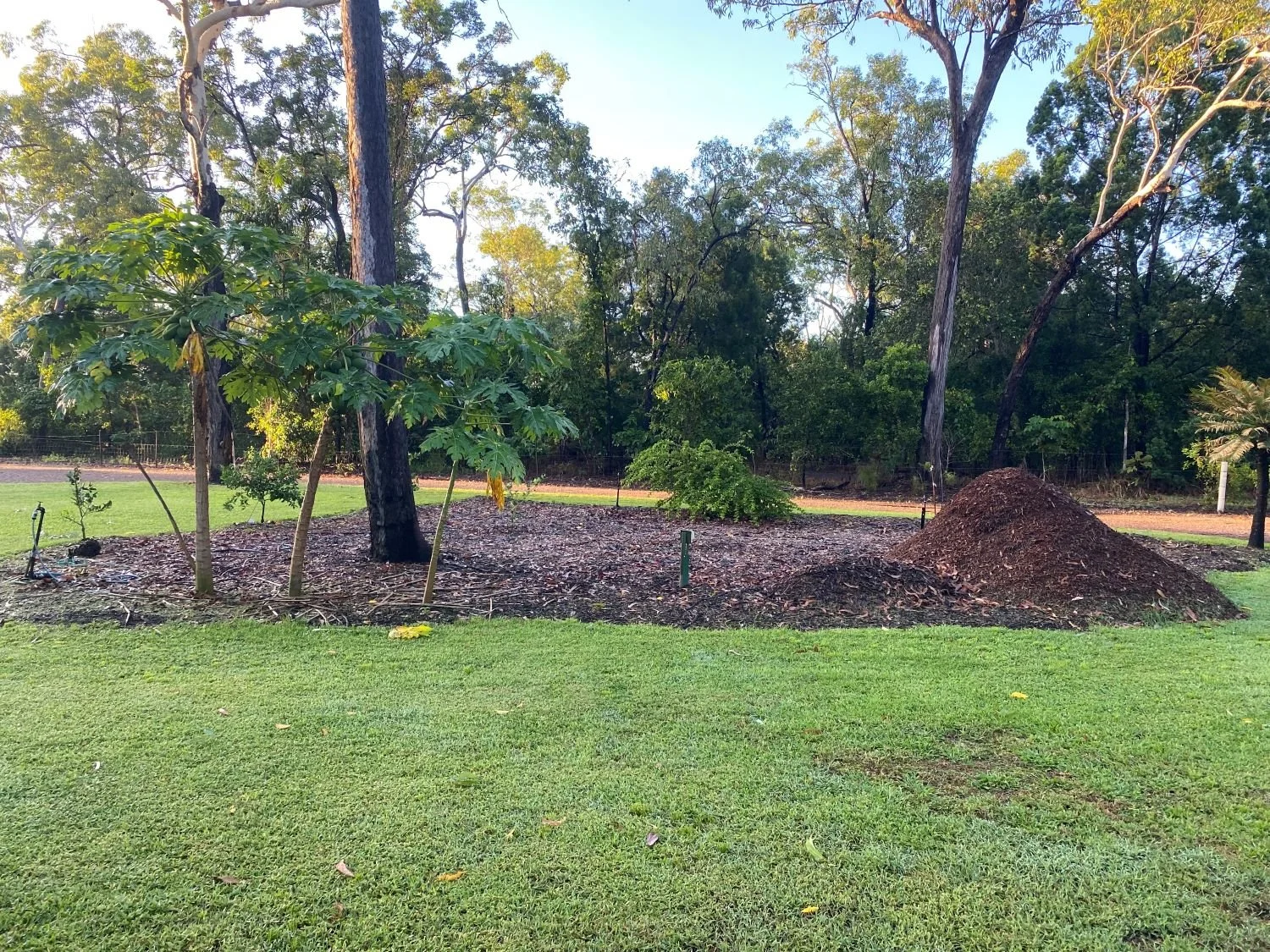
As Darwin’s wet season draws to a close and the dry approaches, we stand at a crossroads—lush, green, and full of potential, but also facing the challenges of weed pressure, thatch, and the need to prepare for months without rain.
But we’re not alone. Across the tropics, gardeners and turf managers are innovating, adapting, and thriving in climates just like ours. From the dense lawns of Singapore to the sustainable landscapes of Florida and the native plantings of Hawaii, there’s a world of ideas to inspire us.
At Quality Garden Services NT, we’re passionate about bringing the best of global tropical gardening to Darwin, Palmerston and Humpty Doo. Whether you need help choosing the right grass, tackling weeds, or transforming your garden into a lush, sustainable oasis, we’re here to help—armed with local knowledge and global insight.
Let’s make this dry season our best yet—healthy lawns, vibrant gardens, and a community that’s as green and resilient as the tropics themselves.
About Us
At Quality Garden Services NT, we’re passionate about healthy soils and vibrant landscapes in Darwin. From turf management and grounds maintenance to garden renovations and soil health advice, our expert team is here to help you achieve your green goals—no matter the season.
References
Australian Bureau of Meteorology. "Climate statistics for Australian locations: Darwin Airport."
NT Government. "Gardening in the Top End."
City of Darwin. "Lawn Care in the Wet Season."
Singapore National Parks Board. "Turfgrass Selection and Management."
University of Florida IFAS Extension. "Florida-Friendly Landscaping™."
Weed Science Society of America. "Weed Management in Turf."
Hawaii Cooperative Extension. "Turfgrass Management in Hawaii."
Singapore Botanic Gardens. "Heritage Trees and Urban Greening."
FAO. "Integrated Weed Management in Tropical Crops."
Costa Rica Ministry of Agriculture. "Tropical Lawn and Garden Care."
Brazilian Horticultural Society. "Sustainable Landscaping in the Tropics."
University of the West Indies. "Caribbean Turfgrass and Garden Management."
Florida Department of Environmental Protection. "Water Conservation in Landscaping."
Singapore Centre for Urban Greenery and Ecology. "Guidelines for Tropical Turfgrass Installation and Management."
NT Weeds Management Branch. "Weed Control in the Top End."
Quality Garden Services NT provides comprehensive services including lawn care, pruning, weed control, mulching, turf management and irrigation checks, all tailored to your property’s specific needs. Our team of experienced professionals is dedicated to keeping your property in top condition year-round, regardless of the season. We’re not just about making your garden look good—we’re about creating a lasting impression for your clients, residents, and visitors.
If you’re in Darwin, Palmerston, Humpty Doo or the rural areas and looking for reliable, trusted garden & grounds maintenance services, look no further than Quality Garden Services NT.
We specialize in turf management, grounds maintenance, and garden care in Darwin and the Northern Territory.
Contact us today (0498649535) to learn more about how wetting agents can transform your lawn!
At Quality Garden Services NT, we understand how important it is to maintain a lush, healthy lawn and vibrant garden in Darwin’s unique climate.
Why Choose Us?
Choosing the right grounds maintenance and gardening service is crucial for the health and appearance of your property. Here’s why we stand out:
Local Expertise: Our team is familiar with the unique climate and soil conditions of the Darwin, Palmerston, Humpty Doo and surrounding areas. We know what works best for your gardens and lawns.
Quality Service: We are committed to delivering high-quality work. Our goal is to exceed your expectations, leaving you with well-maintained outdoor spaces.
Customer Satisfaction: Your satisfaction is our priority. We take the time to listen to your needs and tailor our services accordingly - be it for commercial or private properties.
Thank you for visiting our website!