Turf Management: Understanding What It Takes to Maintain Healthy, High-Performing Turf in the Top End
Quality Garden Services NT - Your trusted partner in creating lush, thriving outdoor spaces in the Northern Territory.
Turf is far more than just grass—it is a complex, living system whose health depends on the careful balance of soil condition, water management, nutrition, mowing practices, and ongoing pest, weed, and disease control. In Darwin and the broader Top End, that complexity is amplified by one of Australia's most demanding climates: intense heat, high humidity, powerful Wet Season rainfall, and long Dry Season dry spells all place exceptional stress on turf throughout the year.
Maintaining healthy, high-performing turf in the Northern Territory is not a matter of following a simple routine—it requires a holistic, season-aware approach that treats every element of the turf system as interconnected. Whether you manage a home lawn, a commercial property, a school oval, or a resort ground, understanding how these factors work together is the foundation of everything that follows in this post.
Introduction
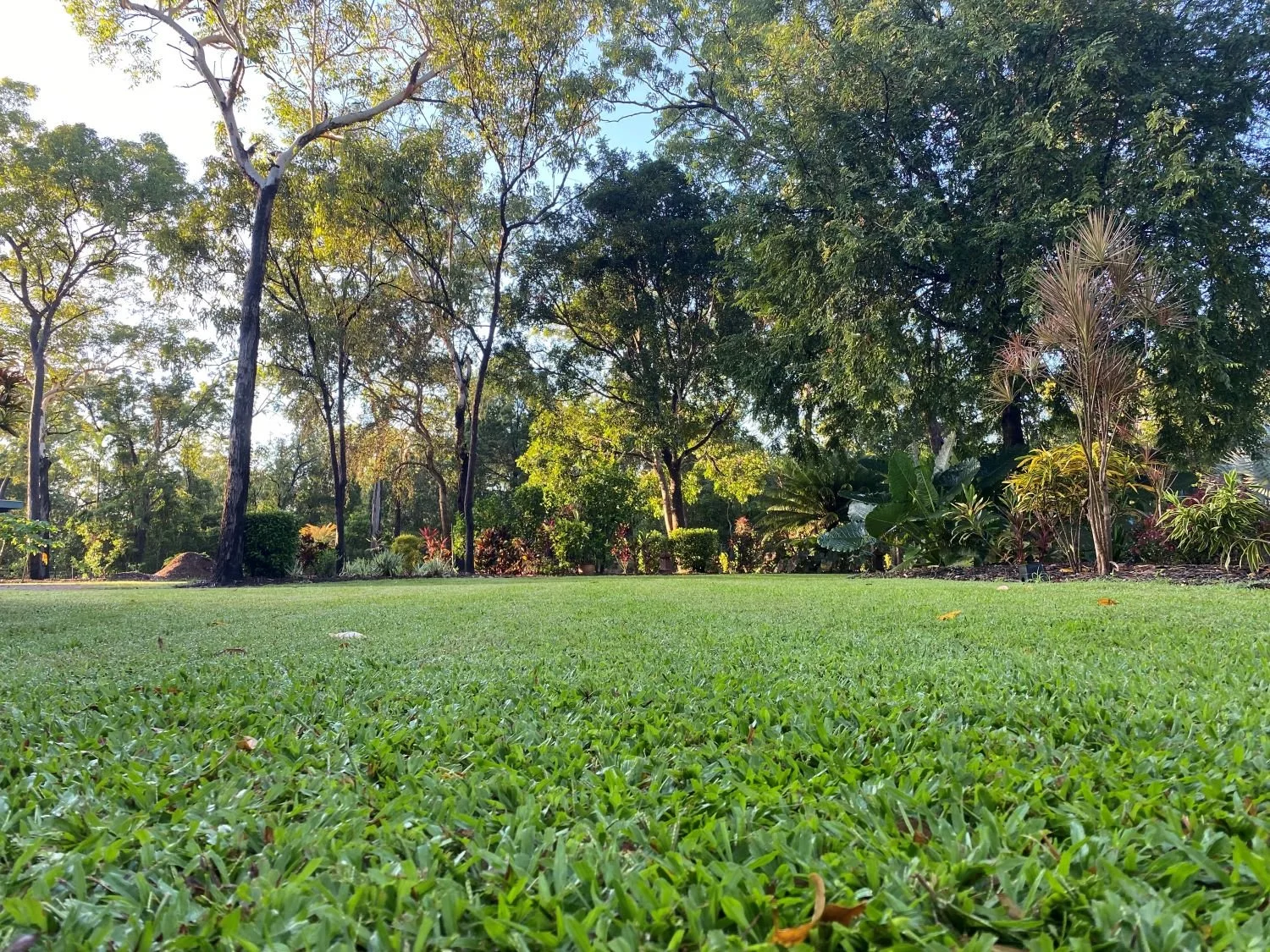
A healthy lawn can often appear deceptively simple. From the outside, turf may seem to be little more than grass that needs water, sunlight, nutrients, and regular mowing. If it’s green and reasonably even, it’s easy to assume everything is working as it should.
However, professional turf management starts with a completely different understanding. Turf is not just grass—it's a living system. Its health and performance depend on the interaction of multiple factors, including the grass itself, the soil beneath it, water, nutrients, sunlight, mowing practices, weather conditions, pests, disease, traffic, and even how the surrounding property is managed.
This interconnected system is especially important in Darwin and the Top End of Australia, where the tropical climate creates both unique opportunities and challenges for turf. Here, high temperatures, seasonal rainfall, intense sunlight, rapid growth during the Wet Season, extended dry periods, and heavy rainfall events all play a role in how turf thrives—or struggles.
For homeowners, this might simply mean wanting a lawn that looks good. But for larger properties, commercial sites, schools, resorts, recreational areas, and other high-use environments, turf is more than just an aesthetic feature. It’s a functional and integral part of the property’s usability, safety, and overall condition.
This is where turf management goes far beyond just mowing a lawn. It’s about creating and maintaining a healthy, high-performing system that is tailored to the environment and its requirements. Let’s delve deeper into the key aspects of turf management in the Top End.
What Is Turf Management?
Turf management is the ongoing process of maintaining the health, performance, and appearance of a turf area. While mowing is one visible component, turf management encompasses much more.
A comprehensive turf management program considers numerous elements, including:
Turf species and suitability
Soil structure and condition
Drainage
Irrigation
Nutrition
Mowing height and frequency
Weed management
Pests and disease
Compaction
Traffic and wear
Seasonal conditions
Recovery and renovation
Environmental impacts
Long-term performance
These factors don’t operate in isolation, and changes in one area can affect multiple others.
For example, poorly drained soil can restrict root development, which in turn reduces turf's ability to access water and nutrients. This weakness can make the turf more susceptible to weeds, pests, and disease. Attempting to compensate with increased irrigation might worsen the original drainage issues, creating a vicious cycle.
Good turf management, therefore, requires a holistic approach. The system must be understood and managed as a whole rather than addressing individual problems in isolation.
Beneath the Surface: Turf Is Only as Good as Its Soil
One of the most important principles of turf management is that what you see above the ground doesn’t always reflect what’s happening below it. Two areas of turf may look similar but have vastly different root systems and soil conditions beneath the surface.
Soil is the physical environment where turf roots grow, and it directly influences water movement, nutrient availability, and oxygen levels. Compaction, for instance, is a common issue. Traffic from vehicles, equipment, or footfall can compress the soil over time, reducing pore spaces and limiting water movement, air exchange, and root penetration. As a result, turf may struggle even when receiving adequate water and fertiliser.
Other soil factors, such as structure, organic matter, pH, and nutrient levels, also play a pivotal role in turf performance. This is why professional turf management focuses on understanding and improving the soil environment rather than only addressing visible turf issues.
The Right Turf for the Right Environment
Not all turf species are created equal, and not all are suited to every environment. Different grass species and cultivars have unique characteristics, including their tolerance to heat, shade, traffic, drought, wet conditions, and specific mowing regimes.
In the Northern Territory, tropical conditions make it especially important to choose turf that is well-suited to the local climate. For instance, a grass variety that thrives in the cooler climates of southern Australia may fail under Darwin’s intense heat and seasonal rainfall extremes.
The intended use of the turf area also matters. A residential lawn will have far different requirements than a school oval, a resort's decorative landscaping, or a high-traffic recreational space. Selecting turf based purely on its appearance is rarely the best choice. The objective is to choose a variety that aligns with the property’s environment, its maintenance capacity, and how the space will actually be used.
Managing Water: More Than Just Irrigation
Water is essential for turf health, but good water management goes beyond simply turning on the sprinklers. The objective is to provide sufficient water to the root zone when needed without creating overly wet conditions or wasting resources.
Factors such as soil type, compaction, slope, thatch, irrigation system efficiency, and competition from trees or other plants all influence water availability. Seasonal conditions also play a major role. In Darwin, Palmerston and Humpty Doo, the Wet Season often brings an abundance of rainfall, making irrigation unnecessary or even harmful in some cases. Conversely, the Dry Season demands careful management of soil moisture to prevent heat and water stress.
Efficient irrigation involves understanding how water interacts with the entire turf system—not just installing sprinklers. It’s about ensuring water reaches the root zone effectively and supports the overall health of the turf.
Balanced Nutrition for Healthy Growth
When turf isn’t performing well, many people immediately think of fertiliser. However, turf nutrition is about more than just adding fertiliser whenever grass appears pale.
Turf requires a balance of nutrients, and the specific amounts depend on factors like species, soil condition, growth rate, weather, and intended use. While nitrogen is vital for growth, too much can lead to excessive mowing requirements and soft, weak growth that’s more susceptible to stress and pests.
Soil testing is an essential component of turf nutrition. By understanding what nutrients are already present in the soil, fertiliser applications can be more targeted and effective. The goal of turf management is balanced growth—not simply maximum growth.
Mowing: A Critical but Often Misunderstood Practice
Mowing is one of the most visible aspects of turf maintenance, but the way turf is cut significantly impacts its long-term condition.
Mowing height, for instance, determines how much leaf material remains after cutting. Cutting turf too aggressively can cause unnecessary stress, particularly in challenging conditions like heat or drought. Mowing frequency should also match the turf’s growth rate, with faster-growing turf requiring more frequent attention.
The condition of the mowing equipment is equally important. Sharp blades provide a clean cut, while dull or poorly maintained equipment can damage the turf and negatively impact its appearance.
Good mowing practices are about more than just cutting grass—they’re about maintaining the turf in a way that supports its overall health and resilience.
Addressing Weeds, Pests, and Disease
Weeds, pests, and diseases are common challenges in turf management, but they are often symptoms of underlying problems rather than standalone issues.
Weeds, for example, tend to thrive in areas where turf is thin or stressed. Addressing the root causes—such as poor irrigation, nutrient imbalances, or compaction—can often reduce weed infestations more effectively than repeated herbicide applications.
Similarly, pests and diseases often exploit weakened turf. Symptoms like yellowing, thinning, or discolouration may have multiple causes, making careful observation and diagnosis essential before deciding on a treatment.
Seasonal and Site-Specific Management
In Darwin, turf management is deeply tied to the seasons. The Wet Season brings rapid growth, heavy rainfall, and high humidity, while the Dry Season introduces heat stress and water scarcity. A successful turf management program must adapt to these seasonal changes and respond to the specific needs of the property.
Each site is unique, and a one-size-fits-all approach rarely works. Turf management programs should be tailored to the property, taking into account factors like soil, shade, traffic, and the intended use of different areas.

Looking Ahead
Turf management in the Top End isn’t just about creating a perfect-looking lawn. It’s about understanding and managing the conditions that allow turf to thrive. By focusing on the entire system—soil, water, nutrition, mowing, and more—it’s possible to create turf that performs reliably, even in Darwin’s challenging climate.
In future articles, we’ll explore specific aspects of turf management in greater detail, providing the knowledge needed to maintain healthy, high-performing turf in the Top End.
If you’re in Darwin, Palmerston, Humpty Doo or the rural areas and looking for reliable, trusted garden & grounds maintenance services, look no further than Quality Garden Services NT.
We specialize in turf management, grounds maintenance, and garden care in Darwin and the Northern Territory.
Contact us today (0498649535) to learn more about how wetting agents can transform your lawn!
At Quality Garden Services NT, we understand how important it is to maintain a lush, healthy lawn and vibrant garden in Darwin’s unique climate.
Why Choose Us?
Choosing the right grounds maintenance and gardening service is crucial for the health and appearance of your property. Here’s why we stand out:
Local Expertise: Our team is familiar with the unique climate and soil conditions of the Darwin, Palmerston, Humpty Doo and surrounding areas. We know what works best for your gardens and lawns.
Quality Service: We are committed to delivering high-quality work. Our goal is to exceed your expectations, leaving you with well-maintained outdoor spaces.
Customer Satisfaction: Your satisfaction is our priority. We take the time to listen to your needs and tailor our services accordingly - be it for commercial or private properties.
Thank you for visiting our website!