
What Type and Style of Hedges Work in Darwin?
Quality Garden Services NT - Your trusted partner in creating lush, thriving outdoor spaces in the Northern Territory.
The unique tropical climate of Darwin, Palmerston and Humpty Doo demands careful hedge selection and maintenance. Native and tropical-adapted species thrive, while temperate favorites require intensive care. With the right practices, hedges can provide privacy, beauty, and structure in gardens, parks, and commercial landscapes across the Top End.
Table of Contents
Introduction: Hedges in the Top End
Darwin’s Climate and Its Impact on Hedges
Best Hedge Plant Options for Darwin
Native Australian Hedges
Adapted Tropical and Subtropical Hedges
Challenging Temperate Hedges: What’s Possible with Care?
Hedge Care in Darwin: Planting, Watering, Feeding, and Pruning
Creative Uses for Hedges in Darwin
Hedging Practices and Shaping Possibilities
Professional Tips, Advice, and Ideas
Conclusion: The Future of Hedging in Darwin
1. Introduction: Hedges in the Top End
Operating a turf management, grounds, and garden maintenance business in Darwin is both a challenge and a privilege. The city’s lush, green spaces and vibrant gardens are a testament to the resilience of plants—and the skill of those who care for them.
Hedges, in particular, are a cornerstone of landscape design, offering privacy, structure, and beauty. But what types and styles of hedges truly work in Darwin’s unique climate? Let’s explore the best options, care practices, and creative uses for hedges in the Top End.
2. Darwin’s Climate and Its Impact on Hedges
Before choosing a hedge, it’s essential to understand the environment it must endure.
Key Climate Features
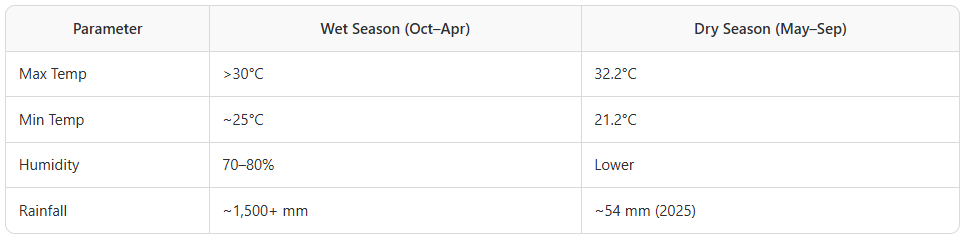
Wet Season: High humidity, heavy rainfall, risk of waterlogging, and cyclones.
Dry Season: Low rainfall, high evaporation, risk of drought stress.
Soil and Environmental Challenges
Soils: Generally poor in nutrients, low in organic matter, and quick to dry out.
Pests/Diseases: High risk in wet season; requires vigilant management.
Storms: Cyclones and strong winds can damage or uproot hedges.
Key Finding:
Hedge plants in Darwin must tolerate both waterlogging and drought, thrive in poor soils, and withstand high humidity and heat.
3. Best Hedge Plant Options for Darwin
Native Australian Hedges
Native plants are the backbone of successful hedging in Darwin. They’re adapted to the local climate, require less maintenance, and support native wildlife.
3.1 Melaleuca (Paperbarks)
Features: Fine, aromatic foliage; bottlebrush flowers; dense, upright growth.
Size: 2–5m tall.
Best For: Privacy screens, windbreaks, formal/informal hedges.
Care: Prune regularly; drought and wet-season tolerant.
3.2 Syzygium (Lillypillies)
Features: Glossy green leaves, red new growth, edible berries.
Varieties:
‘Tiny Trev’ (compact, 1m)
Syzygium australe (3–5m)
Best For: Low to medium hedges, screening, topiary.
Care: Regular pruning for density; generally pest-resistant.
3.3 Callistemon (Bottlebrush)
Features: Vibrant red flowers, tough evergreen foliage.
Varieties: ‘Endeavour’ (upright, 3m)
Best For: Medium to tall hedges, wildlife habitat.
Care: Prune after flowering; drought and flood tolerant.
3.4 Grevillea
Features: Fine, ferny foliage; showy flowers; bird-attracting.
Size: 1–3m.
Best For: Informal hedges, wildlife-friendly gardens.
Care: Prune after flowering.
3.5 Backhousia citriodora (Lemon-scented Myrtle)
Features: Aromatic leaves, white flowers, dense foliage.
Size: 3–7m (can be kept smaller).
Best For: Fragrant, sensory hedges.
Care: Regular trimming.
3.6 Rhagodia spinescens (Saltbush)
Features: Silvery-grey foliage, drought and salt tolerant.
Size: 1–1.5m.
Best For: Coastal gardens, low hedges, erosion control.
Care: Minimal; occasional pruning.
3.7 Other Notable Natives
Graptophyllum excelsum (Scarlet Fuchsia): Red flowers, dense, 2–3m, shade-tolerant.
Pittosporum pauciflorus (Native Orange): Spiny, dense, good for security hedges.
Dwarf Baeckea: Fine foliage, compact, low hedges.
Adapted Tropical and Subtropical Hedges
Some non-native species have proven themselves in Darwin’s climate.
3.8 Hibiscus
Features: Large, showy flowers; evergreen; fast-growing.
Size: 2–4m.
Best For: Informal flowering hedges, tropical gardens.
Care: Regular pruning for bushiness and flowering.
3.9 Bamboo (Clumping Varieties)
Features: Fast-growing, tall, dense.
Size: 3–8m.
Best For: Privacy screens, windbreaks, noise barriers.
Care: Occasional thinning and height control.
3.10 Frangipani
Features: Iconic, fragrant flowers; deciduous in dry season.
Size: 3–6m.
Best For: Feature hedges, flowering screens.
Care: Prune to maintain shape; drought tolerant.
3.11 Casuarina
Features: Fine, needle-like foliage; salt and wind tolerant.
Size: 3–10m.
Best For: Coastal hedges, windbreaks.
Care: Prune for density.
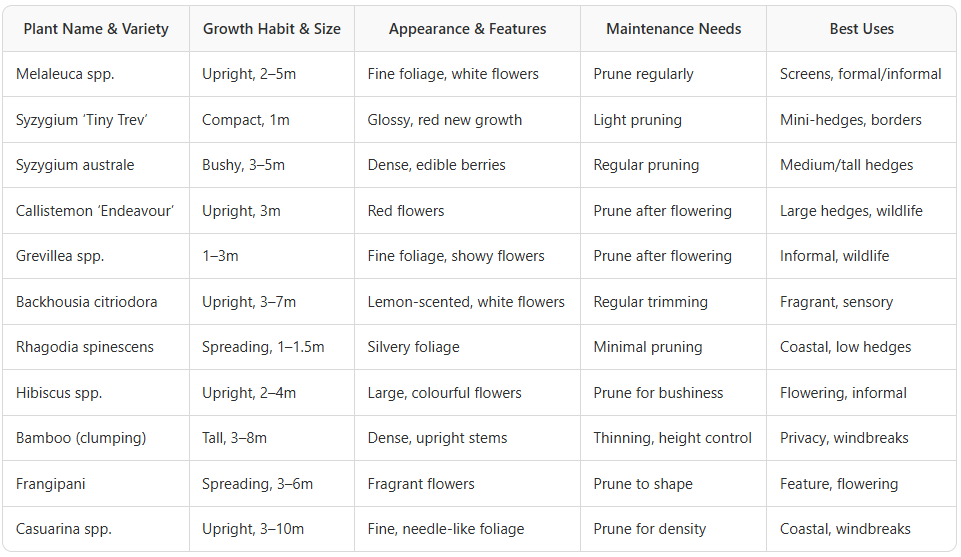
Summary Table: Top Hedge Plants for Darwin
4. Challenging Temperate Hedges: What’s Possible with Care?
Darwin’s climate is tough on classic temperate hedges, but with dedication, a few can be attempted.
4.1 Boxwood (Buxus spp.)
Challenges: Poor tolerance to heat/humidity; root rot risk.
Care: Plant in afternoon shade, ensure excellent drainage, mulch, and monitor for disease.
Success: High maintenance, poor long-term survival.
4.2 Hornbeam (Carpinus betulus)
Challenges: Deciduous, prefers cooler climates.
Care: Plant in shade, improve soil, deep watering, mulch, prune in late winter.
Success: Marginal; may survive short-term but not thrive.
4.3 Privet (Ligustrum spp.)
Challenges: Can be invasive, rapid growth in tropics.
Care: Fertile, well-drained soil, regular watering, frequent pruning.
Success: Adapts better than most; high maintenance.
4.4 Japanese Holly (Ilex crenata)
Challenges: Sensitive to heat/humidity; root rot risk.
Care: Partial shade, well-drained soil, consistent moisture.
Success: Possible for short hedges in protected spots.
4.5 Yew (Taxus spp.)
Challenges: Poor heat/humidity tolerance.
Care: Deep shade, excellent drainage, mulch.
Success: Not recommended; poor survival.
4.6 Rhododendron/Azalea
Challenges: Require acidic, cool, well-drained soil.
Care: Raised beds, dappled shade, regular watering.
Success: Extremely challenging; not realistic for most gardens.
4.7 Viburnum
Challenges: Most prefer cooler, less humid climates.
Care: Choose heat-tolerant species (e.g., Viburnum odoratissimum), regular watering.
Success: Some species adapt with care.
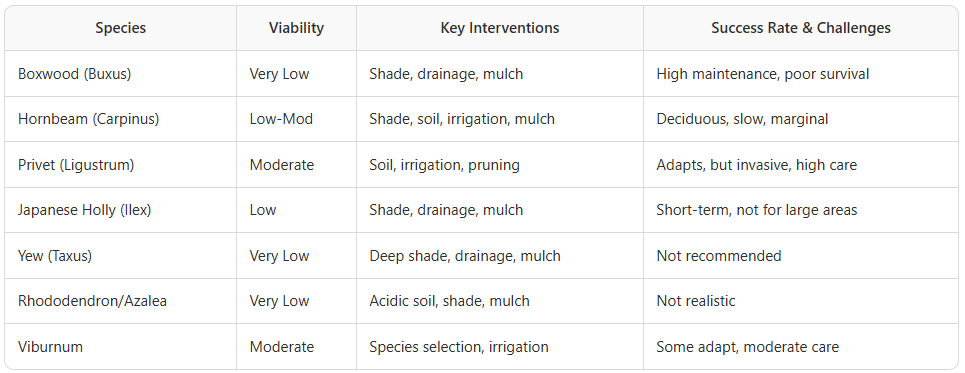
Summary Table: Temperate Hedges in Darwin
Key Finding:
Most temperate hedges are not sustainable in Darwin, but privet and some viburnums can be attempted with intensive care.
5. Hedge Care in Darwin: Planting, Watering, Feeding, and Pruning
Planting
Timing: Best at the start of the wet season (Oct–Dec) for natural rainfall support.
Site Prep: Choose well-drained sites, improve soil with compost or manure, and plant at recommended spacing (30–60 cm apart for dense hedges).
Technique: Dig holes twice as wide as the root ball, water in well.
Watering
Wet Season: Minimal supplemental watering; monitor for waterlogging.
Dry Season: Deep watering 1–2 times per week, early morning preferred.
Fertilizing
Wet Season: Apply slow-release, balanced fertilizer at the start.
Dry Season: Reduce fertilization; use organic mulch for slow nutrient release.
Pruning
Wet Season: Avoid heavy pruning; risk of disease.
Dry Season: Best for shaping and hard pruning.
Routine: Light trimming every 4–6 weeks during active growth.
Pest and Disease Management
Wet Season: Watch for scale, mealybugs, fungal leaf spots, and root rot.
Dry Season: Lower risk, but monitor for caterpillars and grasshoppers.
Prevention: Regular inspection, prompt removal of affected material, maintain plant vigor.
Tools and Techniques
Hand Shears: For precise shaping and small hedges.
Hedge Trimmers: For larger hedges.
Loppers/Saws: For thick branches.
Sanitizing Solution: Clean tools between uses.
6. Creative Uses for Hedges in Darwin
Hedges are versatile and can be used in a variety of settings:
Residential Gardens
Privacy Screens: Block out neighbors or busy streets.
Windbreaks: Protect sensitive plants and outdoor living areas.
Noise Barriers: Dense hedges can reduce road or neighbor noise.
Garden Rooms: Divide large yards into functional spaces.
Commercial and Public Spaces
Boundaries: Define property lines or separate different areas.
Safety Barriers: Guide foot traffic or protect from hazards.
Aesthetic Features: Frame entrances, pathways, or focal points.
Parks and Urban Landscapes
Wildlife Habitat: Natives like grevillea and callistemon attract birds and pollinators.
Erosion Control: Low, spreading hedges stabilize soil on slopes.
Shade and Microclimate: Tall hedges can create cooler, sheltered spots.
Special Applications
Topiary and Art: Formal gardens or public spaces can feature shaped hedges or living sculptures.
Sensory Gardens: Fragrant species like lemon-scented myrtle add a sensory dimension.
7. Hedging Practices and Shaping Possibilities
Formal vs. Informal Hedges
Formal Hedges:
Regular, precise trimming for straight lines or geometric shapes.
Best with dense, small-leaved species (e.g., Syzygium ‘Tiny Trev’, Melaleuca).
Informal Hedges:
Lighter, less frequent pruning for a natural look.
Suits flowering or wildlife-friendly species (e.g., Grevillea, Hibiscus).
Shaping Techniques
Formative Pruning:
In the first year, prune lightly to encourage bushy growth.
Maintenance Pruning:
Remove new growth to maintain shape.
Rejuvenation Pruning:
Every 2–3 years, cut back older hedges to promote new growth.
Topiary and Specialty Shapes:
Use templates or wire frames for complex forms.
Best attempted in the dry season for optimal healing.
Timing
Major Shaping:
Early dry season (May–July) to minimize disease risk.
Light Trimming:
Throughout the growing season, but avoid during heavy rain.
8. Professional Tips, Advice, and Ideas
My Top Recommendations for Darwin Hedges
Go Native:
Native species are more resilient, lower maintenance, and support local wildlife.
Soil Improvement is Key:
Darwin’s soils are poor—add compost, mulch, and organic matter regularly.
Irrigation Planning:
Install drip or soaker systems for efficient dry season watering.
Mulch Generously:
Mulch conserves moisture, suppresses weeds, and improves soil.
Prune Regularly:
Don’t let hedges get away from you—regular light pruning is easier than infrequent heavy cuts.
Monitor for Pests:
Especially during the wet season, check for scale, mealybugs, and fungal issues.
Be Realistic with Temperate Hedges:
If you want a classic box hedge, be prepared for high maintenance and possible disappointment.
Experiment with Shapes:
Darwin’s fast-growing plants are great for creative topiary and living sculptures.
Think Beyond Boundaries:
Use hedges to create garden rooms, wildlife corridors, or sensory spaces.
Innovative Ideas
Mixed Hedges:
Combine different species for year-round interest and resilience.
Edible Hedges:
Lillypillies and some grevilleas offer edible berries—great for family gardens.
Flowering Screens:
Alternate hibiscus and callistemon for a hedge that blooms in waves.
Security Hedges:
Use spiny natives like Pittosporum pauciflorus for natural deterrence.
9. Conclusion: The Future of Hedging in Darwin
Darwin’s climate is both a challenge and an opportunity for creative, resilient hedging. By choosing the right plants—especially natives and tropical-adapted species—and following best-practice care routines, you can create hedges that are beautiful, functional, and sustainable. While temperate classics like boxwood and yew are best left to cooler climates, adventurous gardeners can experiment with privet or viburnum if they’re willing to invest the effort.
As a turf management and garden maintenance professional, I’ve seen firsthand how the right hedge can transform a property—providing privacy, structure, wildlife habitat, and year-round beauty. With thoughtful plant selection, regular care, and a bit of creativity, the possibilities for hedges in Darwin are as lush and varied as the Top End itself.
Best Hedges: Natives (Melaleuca, Syzygium, Callistemon, Grevillea), tropical exotics (Hibiscus, Bamboo, Frangipani).
Challenging Hedges: Privet and some viburnums possible with care; boxwood, yew, and rhododendron not recommended.
Care Essentials: Plant at wet season start, improve soil, irrigate in dry, prune regularly, monitor pests.
Creative Uses: Privacy, windbreaks, wildlife, garden rooms, topiary, edible and sensory gardens.
Professional Advice: Go native, mulch, irrigate, prune, and don’t be afraid to experiment!
References
About Us
At Quality Garden Services NT, we’re passionate about healthy soils and vibrant landscapes in Darwin. From turf management and grounds maintenance to garden renovations and soil health advice, our expert team is here to help you achieve your green goals—no matter the season.
Quality Garden Services NT provides comprehensive services including lawn care, pruning, weed control, mulching, turf management and irrigation checks, all tailored to your property’s specific needs. Our team of experienced professionals is dedicated to keeping your property in top condition year-round, regardless of the season. We’re not just about making your garden look good—we’re about creating a lasting impression for your clients, residents, and visitors.
If you’re in Darwin, Palmerston, Humpty Doo or the rural areas and looking for reliable, trusted garden & grounds maintenance services, look no further than Quality Garden Services NT.
We specialize in turf management, grounds maintenance, and garden care in Darwin and the Northern Territory.
Contact us today (0498649535) to learn more about how wetting agents can transform your lawn!
At Quality Garden Services NT, we understand how important it is to maintain a lush, healthy lawn and vibrant garden in Darwin’s unique climate.
Why Choose Us?
Choosing the right grounds maintenance and gardening service is crucial for the health and appearance of your property. Here’s why we stand out:
Local Expertise: Our team is familiar with the unique climate and soil conditions of the Darwin, Palmerston, Humpty Doo and surrounding areas. We know what works best for your gardens and lawns.
Quality Service: We are committed to delivering high-quality work. Our goal is to exceed your expectations, leaving you with well-maintained outdoor spaces.
Customer Satisfaction: Your satisfaction is our priority. We take the time to listen to your needs and tailor our services accordingly - be it for commercial or private properties.
Thank you for visiting our website!