
Adventurous Garden Styles in Darwin: Transforming the Top End with Creativity and Care
Quality Garden Services NT - Your trusted partner in creating lush, thriving outdoor spaces in the Northern Territory.
Darwin’s unique tropical climate offers both challenges and extraordinary opportunities for adventurous gardeners. With the right knowledge, creativity, and care, you can transform your outdoor space into a vibrant showcase of global garden styles—each adapted to thrive in the Top End.
Introduction: Beyond the Ordinary—Darwin’s Garden Adventure Awaits
Welcome to the lush, sun-drenched world of Darwin, where the tropics meet the outback and every garden tells a story of resilience, adaptation, and beauty. As a local turf management, grounds, and garden maintenance business, we’ve seen firsthand how the climate around Darwin, Palmerston and Humpty Doo—equal parts wild and wonderful—shapes the way we garden. But what if you could go beyond the typical backyard lawn or tropical border? What if your garden could be a living adventure, a tapestry of styles from around the world, each reimagined for the Top End?
In this comprehensive guide, we’ll take you on a journey through some of the world’s most adventurous garden styles—water gardens, hydroponics, desert-inspired xeriscapes, English cottage gardens, Mediterranean havens, Japanese Zen retreats, edible food forests, and vertical living walls. We’ll explore what makes each style unique, the challenges of bringing them to life in Darwin’s climate, and the endless possibilities that await with the right care and expertise.
So grab your hat, slather on some sunscreen, and let’s dive into the adventurous world of Darwin gardening!
Darwin’s Gardening Environment: The Top End’s Unique Canvas
Before we dig into specific garden styles, it’s essential to understand the unique environmental canvas we’re working with in Darwin. The Top End’s climate and soils are unlike anywhere else in Australia, presenting both hurdles and hidden opportunities for creative gardeners.
Climate: Wet, Dry, and Everything In Between
Darwin’s climate is defined by dramatic contrasts:
Wet Season (November–April):
Expect monsoonal rains, high humidity (often over 80%), and frequent thunderstorms. January alone can see up to 432 mm of rain. Cyclone risk is highest during this period, and the air is thick with moisture.
Dry Season (May–October):
The dry brings warm, sunny days and cool nights. Rainfall drops to almost nothing (as little as 1.1 mm in July), and humidity falls to around 60–65%. This is the most comfortable time for outdoor activities and gardening.
The Build-Up (September–November):
A steamy transition with rising temperatures and humidity, signaling the approach of the wet.
Annual Averages:
Rainfall: 1,736.8 mm
Temperatures: 23.3°C (min) to 32.1°C (max)
UV Index: 13 (very high—sun protection is a must!)
Cyclone wind gusts: up to 217 km/h
Soils: A Patchwork of Possibilities
Darwin’s soils are as varied as its weather:

Most soils in the region are low in fertility and organic matter, requiring regular amendment and careful management to support lush, adventurous gardens.
Environmental Challenges and Opportunities
High humidity and rainfall can promote fungal diseases and root rot.
Extended dry periods demand efficient irrigation and drought management.
Cyclone risk means gardens must be designed for wind resistance.
Intense UV can stress sensitive plants—shade is often essential.
Soil fertility is generally low, so composting and mulching are vital.
But with these challenges come opportunities: year-round warmth, abundant sunshine, and the chance to grow a dazzling array of tropical and subtropical plants.
Adventurous Garden Styles: Bringing the World to Your Darwin Backyard
Let’s explore eight adventurous garden styles, each with its own character, challenges, and endless possibilities for the Top End.
1. Water Gardens and Aquatic Gardens
What Is a Water Garden?
A water garden is a tranquil oasis where ponds, streams, and aquatic plants take center stage. These gardens evoke a sense of calm, attract wildlife, and provide a cooling visual effect—especially welcome in Darwin’s heat.
Key Features and Plants
Ponds and Water Features: Central elements, often partially below ground for temperature regulation.
Aquatic Plants:
Hardy waterlilies (bloom year-round in Darwin)
Tropical water plants: water hyacinth, lotus, bromeliads
Fish:
Goldfish and koi (with careful water management)
Native fish species for local adaptation
Setup Requirements
Filtration and Aeration: Essential for water quality and fish health.
Shade: Floating plants or partial cover to keep water cool and reduce algae.
Overflow Systems: To handle heavy monsoonal rains and prevent flooding.
Mosquito Management: Regular cleaning and movement to prevent breeding.
Darwin-Specific Challenges
Heat and Evaporation: High temperatures can overheat water and stress aquatic life.
Monsoonal Rains: Risk of overflow and debris; robust drainage is a must.
Mosquitoes: Stagnant water can become a breeding ground.
Cyclone Risk: Secure structures and plants to withstand storms.
Endless Possibilities
With the right care, water gardens in Darwin can be lush, vibrant, and teeming with life. Imagine a pond filled with blooming waterlilies, dragonflies darting above the surface, and the gentle sound of water trickling over rocks—a true tropical paradise.
Key Tip:
Use hardy, tropical-adapted aquatic plants and design overflow systems to handle heavy rain. Regular maintenance is essential for water quality and mosquito control.
2. Hydroponic Gardening
What Is Hydroponic Gardening?
Hydroponics is the art of growing plants without soil, using nutrient-rich water solutions. This method offers precise control over plant nutrition and is ideal for maximizing space and productivity.
Key Features and Crops
Systems:
Deep Water Culture (DWC)
Nutrient Film Technique (NFT)
Ebb and Flow
Vertical hydroponic setups
Crops:
Leafy greens: lettuce, spinach, kale, Asian greens
Herbs: basil, mint, parsley, coriander
Fruiting vegetables: tomatoes, cucumbers, peppers, strawberries
Setup Requirements
Hydroponic System: Pumps, reservoirs, growing media.
Environmental Control: Shade, ventilation, sometimes supplemental lighting.
Monitoring: Regular checks of pH, nutrient levels, and water temperature.
Darwin-Specific Challenges
Heat and Humidity: Can stress plants and promote fungal diseases.
Power Outages: Disrupt pumps and environmental controls.
Technical Knowledge: Requires regular monitoring and troubleshooting.
Endless Possibilities
Hydroponics allows Darwin gardeners to bypass poor soils and grow fresh produce year-round—even in small spaces. Vertical hydroponic towers can turn a sunny wall into a lush, edible tapestry.
Key Tip:
Choose heat-tolerant crops, use shade cloth and ventilation, and consider automated monitoring for nutrients and pH. Backup power solutions are wise for critical systems.
3. Desert-Style/Xeriscape Gardens
What Is a Desert-Style Garden?
Desert gardens, or xeriscapes, celebrate drought-tolerant plants and water-wise design. They use gravel, rocks, and minimal irrigation to create striking, low-maintenance landscapes.
Key Features and Plants
Succulents: Agave, aloe, echeveria
Cacti: Various species (with caution—some may not tolerate Darwin’s wet season)
NT Natives: Adapted to rocky, low-rainfall habitats
Setup Requirements
Well-Drained Soil: Raised beds or mounds to prevent waterlogging.
Mulch and Gravel: Suppress weeds and retain soil moisture.
Minimal Irrigation: Except during establishment.
Darwin-Specific Challenges
Wet Season: Heavy rainfall can cause root rot in succulents and cacti.
Humidity: Promotes fungal issues.
Plant Selection: Some desert plants may not thrive in prolonged humidity.
Endless Possibilities
A desert-style garden in Darwin can be a sculptural masterpiece, with bold forms, dramatic textures, and year-round interest. By choosing NT-native drought-tolerant species, you can create a resilient, water-wise landscape that stands out from the crowd.
Key Tip:
Use raised beds for improved drainage and select local species for better adaptation. Shelter sensitive plants during the wet season.
4. English Cottage Gardens
What Is an English Cottage Garden?
The English cottage garden is a romantic, informal style packed with flowers, herbs, and shrubs. It’s all about color, fragrance, and a “wild” abundance.
Key Features and Plants
Traditional Plants: Roses, foxgloves, delphiniums, lavender, hollyhocks
Herbs: Parsley, mint, chives
Tropical Substitutes:
Pentas, salvias, tropical hibiscus, zinnias, marigolds
Setup Requirements
Rich, Well-Drained Soil: Amended with compost and organic matter.
Regular Watering and Feeding: Especially during the dry season.
Partial Shade: To protect sensitive plants from intense sun.
Darwin-Specific Challenges
Heat and Humidity: Many traditional cottage plants struggle.
Fungal Diseases: High humidity promotes rapid decline in non-tropical perennials.
Heavy Rainfall: Can cause root rot and nutrient leaching.
Endless Possibilities
By substituting with tropical or subtropical “lookalikes,” you can capture the spirit of an English cottage garden—lush, colorful, and fragrant—even in Darwin. Imagine a riot of blooms, buzzing with bees and butterflies, right outside your door.
Key Tip:
Provide afternoon shade, use heavy mulching, and choose heat-tolerant herbs and flowers for best results.
5. Mediterranean Gardens
What Is a Mediterranean Garden?
Inspired by the sun-drenched coasts of southern Europe, Mediterranean gardens feature aromatic herbs, drought-tolerant shrubs, and a relaxed, rustic vibe.
Key Features and Plants
Herbs: Lavender, rosemary, thyme, sage
Trees: Olive, citrus
Flowers: Bougainvillea, agapanthus
Hardscape: Gravel paths, terracotta pots, stonework
Setup Requirements
Well-Drained Soil: Often amended with sand or gravel.
Full Sun Exposure: Essential for Mediterranean plants.
Minimal Watering: Once established.
Darwin-Specific Challenges
Humidity: Can cause fungal issues in Mediterranean herbs.
Wet Season: May stress drought-adapted plants.
Plant Selection: Some species (e.g., lavender) may not thrive in tropical conditions.
Endless Possibilities
With careful plant selection and creative design, you can evoke the charm of the Mediterranean in Darwin. Use humidity-tolerant varieties, raised beds, and gravel mulch to create a garden that’s both beautiful and resilient.
Key Tip:
Substitute with tropical analogues (e.g., Vietnamese mint for oregano) and plant in raised beds or containers for better drainage.
6. Japanese Zen Gardens
What Is a Japanese Zen Garden?
Zen gardens are minimalist, contemplative spaces featuring rocks, gravel, sand, and carefully placed plants. They emphasize tranquility, balance, and the beauty of simplicity.
Key Features and Plants
Hardscape: Raked gravel or sand, carefully placed rocks
Plants: Bamboo, Japanese maple (may struggle in tropics), ferns, mosses
NT-Adapted Substitutes: Native grasses, cycads, palms
Setup Requirements
Minimalist Design: Focus on balance and simplicity.
Shaded Areas: To mimic forest understory.
Regular Maintenance: Raking gravel, weeding.
Darwin-Specific Challenges
Weed Growth: High humidity and rainfall encourage weeds in gravel areas.
Plant Suitability: Some traditional plants are unsuited to tropical heat.
Bamboo Management: Can become invasive if not managed.
Endless Possibilities
A Zen garden in Darwin can be a serene retreat, blending local stone and NT-adapted plants for authenticity and resilience. Add a small water feature for cooling and tranquility.
Key Tip:
Use clumping bamboo varieties, regularly weed and rake gravel, and choose local stone and plants for a Top End twist on this classic style.
7. Edible Food Forest Gardens / Permaculture
What Is a Food Forest Garden?
Food forests mimic natural ecosystems, layering fruit trees, shrubs, herbs, and groundcovers to create a sustainable, productive landscape.
Key Features and Plants
Fruit Trees: Mango, banana, pawpaw, citrus
Understory Crops: Cassava, sweet potato, taro, turmeric, ginger
Herbs: Basil, lemongrass, Vietnamese mint
Setup Requirements
Water Harvesting: Swales, mulched basins for drainage and moisture retention.
Diverse Plantings: For resilience and pest control.
Soil Building: Mulching and composting to improve fertility.
Darwin-Specific Challenges
Weeds: Rapid growth and competition for nutrients.
Pests and Diseases: High humidity increases pressure.
Cyclone Risk: Tall or shallow-rooted trees are vulnerable.
Endless Possibilities
A food forest in Darwin can provide a year-round bounty of fresh produce, shade, and habitat for wildlife. With dense planting and thoughtful design, you can create a self-sustaining ecosystem that’s both beautiful and productive.
Key Tip:
Select proven tropical species, use dense groundcovers and mulching, and prune trees for wind resistance.
8. Vertical Gardens and Living Walls
What Is a Vertical Garden?
Vertical gardens maximize limited space by growing plants on walls or freestanding structures. They’re perfect for courtyards, balconies, or as striking green features in larger gardens.
Key Features and Plants
Leafy Greens: Lettuce, spinach, Asian greens
Herbs: Basil, mint, parsley
Ornamentals: Ferns, bromeliads, trailing vines
Setup Requirements
Vertical Frames or Pockets: For planting.
Irrigation System: Often automated drip or hydroponic.
Shaded or Sheltered Location: To prevent overheating.
Darwin-Specific Challenges
Humidity: Promotes fungal diseases.
Dry Season: Rapid drying in exposed locations.
Cyclone Risk: Structures must be secure.
Endless Possibilities
Vertical gardens can turn a bare wall into a lush, living tapestry—perfect for herbs, salad greens, or ornamentals. With automated irrigation and cyclone-rated fixings, they’re both practical and beautiful in Darwin’s climate.
Key Tip:
Use tropical-adapted, shallow-rooted plants, install automated irrigation, and place in sheltered locations for best results.
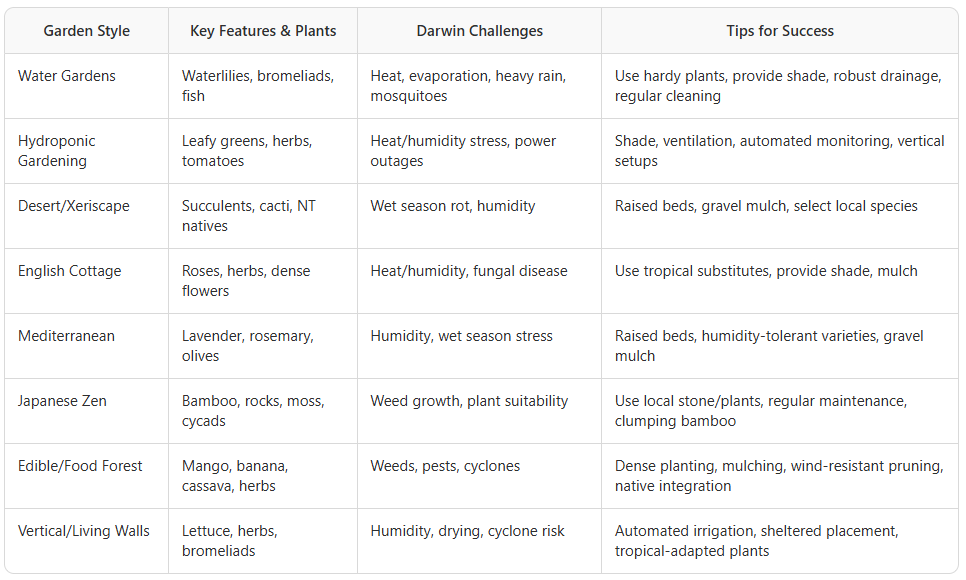
Comparative Table: Garden Styles in Darwin
General Tips and Strategies for Adventurous Gardening in Darwin
No matter which adventurous style you choose, success in Darwin’s climate comes down to a few key strategies:
1. Soil Improvement
Add Organic Matter: Compost, manure, and mulch improve fertility and water retention.
Mulching: Retains moisture, suppresses weeds, and moderates soil temperature.
Raised Beds: Improve drainage, especially in clay or poorly structured soils.
2. Water Management
Efficient Irrigation: Drip systems and mulched basins conserve water and target roots.
Rainwater Harvesting: Swales and tanks make the most of the wet season.
Overflow Planning: Design gardens to handle heavy rain and prevent waterlogging.
3. Shade and Shelter
Shade Structures: Protect sensitive plants from intense sun and UV.
Windbreaks: Use hedges or fences to shield gardens from cyclone winds.
Cyclone Preparation: Secure structures, prune trees, and choose wind-resistant species.
4. Plant Selection
Choose Adapted Varieties: Tropical and NT-native plants are more resilient.
Substitute Wisely: Use tropical “lookalikes” for traditional temperate plants.
Diversity: Mix species for resilience against pests, diseases, and weather extremes.
5. Regular Maintenance
Monitor for Pests and Diseases: High humidity can accelerate problems.
Prune and Thin: Improve airflow and reduce cyclone risk.
Feed and Water Consistently: Especially during establishment and the dry season.
Conclusion: The Endless Possibilities of Adventurous Gardening in Darwin
Darwin’s gardens are as bold and diverse as the people who tend them. While the Top End’s climate and soils present real challenges, they also open the door to a world of adventurous garden styles—each offering its own rewards, surprises, and beauty.
With the right knowledge, creativity, and care, you can transform your outdoor space into a living adventure: a tranquil water garden, a productive hydroponic oasis, a sculptural desert landscape, a riotous cottage border, a Mediterranean retreat, a Zen sanctuary, a bountiful food forest, or a vertical wall of green.
As your local turf management, grounds, and garden maintenance experts, we’re passionate about helping Darwin gardeners dream big and garden boldly. Whether you’re starting from scratch or looking to reinvent your backyard, we’re here to provide the expertise, support, and hands-on care you need to make your adventurous garden vision a reality.
Ready to start your own garden adventure? Contact us today and let’s create something extraordinary—right here in the heart of the Top End.
About Us
At Quality Garden Services NT, we’re passionate about healthy soils and vibrant landscapes in Darwin. From turf management and grounds maintenance to garden renovations and soil health advice, our expert team is here to help you achieve your green goals—no matter the season.
If you’re in Darwin, Palmerston, Humpty Doo or the rural areas and looking for reliable, trusted garden & grounds maintenance services, look no further than Quality Garden Services NT.
We specialize in turf management, grounds maintenance, and garden care in Darwin and the Northern Territory.
Contact us today (0498649535) to learn more about how wetting agents can transform your lawn!
At Quality Garden Services NT, we understand how important it is to maintain a lush, healthy lawn and vibrant garden in Darwin’s unique climate.
Why Choose Us?
Choosing the right grounds maintenance and gardening service is crucial for the health and appearance of your property. Here’s why we stand out:
Local Expertise: Our team is familiar with the unique climate and soil conditions of the Darwin, Palmerston, Humpty Doo and surrounding areas. We know what works best for your gardens and lawns.
Quality Service: We are committed to delivering high-quality work. Our goal is to exceed your expectations, leaving you with well-maintained outdoor spaces.
Customer Satisfaction: Your satisfaction is our priority. We take the time to listen to your needs and tailor our services accordingly - be it for commercial or private properties.
Thank you for visiting our website!