
What the First Storms Reveal About Your Property in Darwin
Quality Garden Services NT - Your trusted partner in creating lush, thriving outdoor spaces in the Northern Territory.
The first storms of Darwin’s wet season are more than just a dramatic weather event—they’re a powerful diagnostic tool, exposing hidden weaknesses and opportunities in your property’s landscape, turf, drainage, and structures. Understanding what these storms reveal is the first step to building a resilient, beautiful, and safe property for the months ahead.
Introduction: The Wet Season’s Opening Act
As the oppressive heat and humidity of Darwin’s build-up finally break with the first thunderous downpours, every property in the Top End undergoes a real-world stress test. For turf managers, groundskeepers, and garden maintenance professionals, these early storms are both a challenge and an opportunity—a chance to see how months of dry-season preparation (or neglect) stand up to nature’s onslaught.
In 2026, with the Bureau of Meteorology (BOM) forecasting a later-than-usual rainfall onset and the lingering effects of El Niño, the first storms are arriving with their usual drama but perhaps even greater significance. Whether you’re in Nightcliff, Palmerston, Larrakeyah, or the rural fringes (Humpty Doo, Berry Springs or even further out), what happens in your garden, on your lawn, and around your property in these first weeks of rain will set the tone for the entire wet season.
This comprehensive guide—written from the perspective of a Darwin-based turf management and grounds maintenance business—will walk you through:
The unique climate context of the 2026–2027 wet season
The most common property problems exposed by the first storms
Turf and lawn care strategies tailored for Darwin’s tropical conditions
A practical, month-by-month property preparedness timeline
Actionable advice to help you turn storm season challenges into opportunities for a healthier, safer, and more beautiful property
1. Darwin’s 2026–2027 Wet Season: What Makes This Year Unique?
The Build-Up: Nature’s Pressure Cooker
From October to December, Darwin enters the infamous ‘build-up’—a period marked by soaring humidity, stifling heat, and a restless atmosphere. Daytime temperatures regularly exceed 32°C, and the air feels thick enough to cut with a knife. Locals know this is the calm before the storm, as the land and sea conspire to unleash the first dramatic thunderstorms of the season.
When Do the First Storms Arrive?
Typically, the first severe storms hit Darwin in October or November, before the full onset of the monsoon. These storms are notorious for:
Intense, short-lived downpours (sometimes over 100 mm in a single event)
Frequent, spectacular lightning displays
Strong wind gusts (occasionally exceeding 76 km/h)
Highly localised impacts—one suburb may be drenched while another stays dry
2026–2027: A Season Shaped by El Niño
This year, the BOM is forecasting a later than normal rainfall onset for Darwin and the Top End, with a 55–80% chance that the crucial 50 mm rainfall threshold won’t be reached until mid-November or later. El Niño is also expected to:
Delay the arrival of the monsoon (usually late December)
Reduce the number of active monsoon bursts
Lower the risk of tropical cyclones, though the threat remains
What does this mean for your property?
A longer, hotter build-up increases stress on turf, trees, and gardens. When the first storms finally arrive, they hit parched, compacted soils and dry-season debris—magnifying the risk of drainage failures, turf diseases, and structural damage.
Key Wet Season Dates for Darwin (2026–2027)

2. What the First Storms Reveal: A Property Health Check
The first storms of the wet season are like a spotlight, illuminating every hidden flaw and forgotten maintenance task on your property. Here’s what to watch for—and why these issues are so common in Darwin’s tropical climate.
2.1 Drainage Failures
What You’ll See:
Water pooling in lawns, gardens, or paved areas; localised flooding; slow-draining or overflowing stormwater systems.
Why It Happens:
Darwin’s intense downpours can overwhelm even well-designed drainage. Compacted, clay-rich soils (common in suburbs like Karama and Leanyer) prevent rapid infiltration, while blocked or undersized drains quickly back up.
What It Reveals:
Blocked or undersized stormwater drains
Poorly graded lawns or garden beds
Compacted soil needing aeration
Key Finding:
If water is still pooling 24 hours after rain, your drainage needs urgent attention.
2.2 Waterlogged and Diseased Turf
What You’ll See:
Squelchy, muddy lawns; yellowing or thinning grass; patches of dead turf; mushrooms or white fungal growth.
Why It Happens:
After months of dry weather, soils are hard and less absorbent. The first heavy rains saturate the ground, suffocating grass roots and creating ideal conditions for fungal diseases like brown patch and Pythium.
What It Reveals:
Soil compaction and poor drainage
Excess thatch or organic matter
Early signs of root rot or fungal infection
2.3 Soil Erosion and Nutrient Leaching
What You’ll See:
Bare patches on slopes; exposed roots; sediment in drains; stunted or yellowing plants.
Why It Happens:
Heavy rain on bare or poorly vegetated ground washes away topsoil and nutrients. This is especially common in new developments or recently landscaped areas (e.g., Palmerston’s growth corridors).
What It Reveals:
Lack of ground cover or mulch
Poor soil structure
Need for erosion control measures
2.4 Damaged or Weak Trees and Palm Fronds
What You’ll See:
Broken branches; fallen palm fronds; uprooted or leaning trees; debris scattered across lawns and driveways.
Why It Happens:
The dry season allows dead wood to accumulate. The first storms, with their wind and sudden weight of rain, expose structural weaknesses—especially in older suburbs with mature trees like Fannie Bay and Parap.
What It Reveals:
Trees needing pruning or removal
Palms overdue for frond and seed pod trimming
Potential hazards to people and property
2.5 Blocked Gutters and Stormwater Drains
What You’ll See:
Overflowing gutters; water running down walls; localised flooding near downpipes; debris in stormwater pits.
Why It Happens:
Dry-season leaf litter, twigs, and dust accumulate unnoticed. The first storms wash this debris into gutters and drains, causing blockages and overflow.
What It Reveals:
Gutters and downpipes needing cleaning
Stormwater pits requiring maintenance
Risk of water damage to eaves and foundations
2.6 Retaining Wall and Fencing Weaknesses
What You’ll See:
Cracked or leaning retaining walls; fence posts shifting; sagging or collapsed sections.
Why It Happens:
Sudden soil saturation increases lateral pressure on retaining walls and fence footings, especially in clay soils that expand when wet.
What It Reveals:
Structural weaknesses in walls and fences
Need for drainage behind retaining structures
Potential safety hazards
2.7 Pest Outbreaks: Mosquitoes, Termites, and Lawn Grubs
What You’ll See:
Swarms of mosquitoes; termite mud trails; patches of rapidly browning turf (armyworm or black beetle larvae).
Why It Happens:
Standing water from storms creates perfect breeding grounds for mosquitoes. Termites thrive in moist conditions and may invade weakened timber. Lawn grubs hatch in response to increased soil moisture, attacking stressed turf.
What It Reveals:
Areas of poor drainage or standing water
Timber structures needing inspection
Lawns vulnerable to pest attack
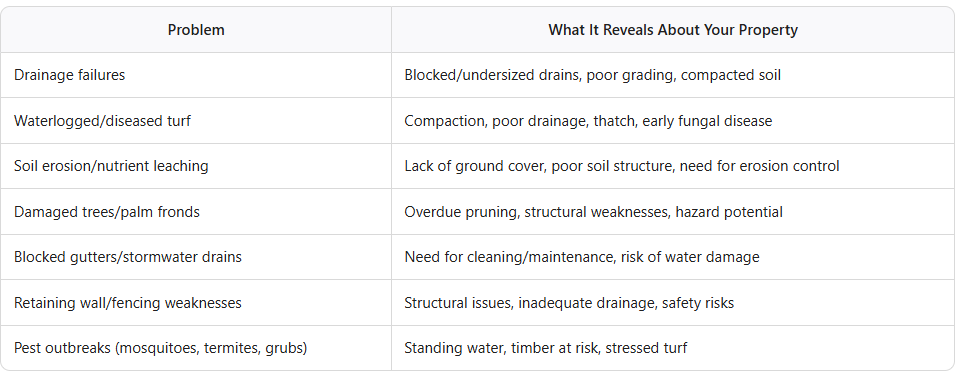
2.8 Summary Table: Problems Exposed by First Wet Season Storms
3. Turf and Lawn Care: Darwin’s Wet Season Playbook
3.1 Best Lawn Varieties for Darwin’s Tropics
Choosing the right turf is the foundation of a resilient, beautiful lawn in Darwin’s challenging climate. Here’s what works best:

Pro Tip:
Sir Walter Buffalo and Zoysia are top picks for Darwin’s mix of sun, shade, and wet/dry extremes.
3.2 How Lawns Respond to the First Heavy Rains
Temporary Saturation: Well-drained lawns recover quickly, but persistent pooling signals compaction or drainage issues.
Root Stress: Excess moisture can suffocate roots, causing yellowing or thinning.
Fungal Disease Risk: High humidity and wet conditions favour diseases like brown patch and Pythium.
Weed Invasion: Disturbed or stressed turf is more vulnerable to weeds after storms.
3.3 Pre-Wet-Season Lawn Preparation
Timing: September–November (before the first storms)

Local Insight:
In suburbs with heavy clay soils (e.g., Malak, Moil), aeration and top dressing are especially important to prevent waterlogging.
3.4 Post-Storm Lawn Recovery
What to Do After the First Storms:
Wait for Drying: Avoid walking or mowing until the lawn is dry to prevent compaction.
Assess Damage: Look for pooling, compaction, yellowing, or fungal signs.
Aerate if Needed: If soil is compacted or waterlogged, aerate to restore oxygen and drainage.
Fertilise Lightly: If grass appears yellow or faded, apply a light, balanced fertiliser after soil has dried.
Treat Fungal Patches: Spot-treat visible fungal outbreaks promptly.
Control Weeds: Use pre-emergent herbicides and hand weeding as needed.
Level Low Spots: Top dress areas where water pooled.
3.5 Common Wet Season Lawn Problems

4. Property Preparedness Timeline: September–December
A proactive approach is the best defence against the challenges revealed by the first storms. Here’s a month-by-month guide for Darwin property owners and managers.
September: Laying the Groundwork
Review and update your emergency plan (evacuation routes, contacts)
Book professional arborist inspections for trees and palms
Begin clearing gutters, downpipes, and private drains
Inspect and repair fences, roofs, and outdoor structures
Check insurance coverage for cyclone and storm events
October: Major Maintenance
Complete major tree and palm pruning/removal (focus on dead branches, heavy fronds, seed pods)
Remove or secure loose outdoor items (furniture, tools, play equipment)
Restock and check emergency kits (water, food, first aid, torches, documents)
Inspect stormwater drainage for blockages or damage
Aerate and top dress lawns; apply slow-release fertiliser
November: Final Checks
Finalise all tree and palm maintenance
Conduct a thorough property inspection for hazards
Ensure all insurance documents are current and stored in waterproof containers
Monitor council updates for clean-up services (note: post-Cyclone Fina, next city-wide collection is May 2027)
Dethatch lawns if needed
December: Ongoing Vigilance
Monitor for new hazards as storms begin (fallen branches, blocked drains)
Respond quickly to storm impacts (clear debris, treat turf diseases)
Avoid mowing or walking on wet lawns
Report public stormwater drainage issues to council as needed
Preparedness Checklist for Darwin Properties

5. Actionable Advice: Turning Storm Season Challenges into Opportunities
For Turf and Lawn
Aerate and top dress before the first storms—especially in compacted or clay-heavy soils.
Choose resilient turf varieties like Sir Walter Buffalo or Zoysia for long-term success.
Monitor for pooling and drainage issues after storms; address them promptly to prevent turf diseases.
Treat fungal outbreaks early and replenish nutrients lost to heavy rain.
Avoid mowing wet lawns to prevent compaction and disease spread.
For Trees and Gardens
Prune trees and palms before the wet season to reduce storm damage risk.
Remove dead wood and heavy seed pods—especially from palms, which can drop dangerous debris.
Check for structural weaknesses in retaining walls and fences; repair as needed.
Mulch garden beds to reduce erosion and retain soil moisture.
For Drainage and Structures
Clear gutters and stormwater drains before the first storms and after major events.
Inspect and maintain retaining walls and fences—look for signs of movement or cracking.
Report public drainage issues to the City of Darwin promptly.
For Pest Management
Eliminate standing water to reduce mosquito breeding.
Inspect timber structures for termite activity after the first rains.
Monitor lawns for grub activity and treat as needed.
6. Local Case Studies: Lessons from Darwin Suburbs
Nightcliff: Coastal Drainage Challenges
Properties near the foreshore often experience saltwater intrusion and poor drainage after storms. Choosing salt-tolerant turf (like Zoysia) and maintaining raised garden beds can help.
Palmerston: Rapid Growth, Rapid Runoff
Newer developments sometimes lack mature landscaping, making them prone to erosion and nutrient leaching. Early mulching and ground cover planting are essential.
Larrakeyah: Mature Trees, Mature Risks
Older suburbs with large trees face higher risks of storm damage. Regular arborist inspections and proactive pruning are critical.

7. Conclusion: The First Storms as Your Property’s Best Teacher
The first storms of Darwin’s wet season are not just a weather event—they’re a wake-up call. They reveal the strengths and weaknesses of your property’s turf, gardens, drainage, and structures. By paying close attention to what these storms expose, and acting on the lessons they provide, you can transform vulnerabilities into opportunities for improvement.
As a local turf management and grounds maintenance business, our advice is simple:
Start early, maintain regularly, and respond quickly to what the first storms reveal. With the right preparation and care, your property can not only survive the wet season—it can thrive.
Need Help? Contact Your Local Experts
If you’ve noticed any of the issues described above—or want to ensure your property is ready for whatever the 2026–2027 wet season brings—get in touch with our team.
We offer:
Professional turf and lawn care tailored for Darwin’s climate
Tree and palm maintenance, including pre-cyclone pruning
Drainage assessments and solutions
Emergency storm response and post-storm recovery
If you’re in Darwin, Palmerston, Humpty Doo or the rural areas and looking for reliable, trusted garden & grounds maintenance services, look no further than Quality Garden Services NT.
We specialize in turf management, grounds maintenance, and garden care in Darwin and the Northern Territory.
Contact us today (0498649535) to learn more about how wetting agents can transform your lawn!
At Quality Garden Services NT, we understand how important it is to maintain a lush, healthy lawn and vibrant garden in Darwin’s unique climate.
Why Choose Us?
Choosing the right grounds maintenance and gardening service is crucial for the health and appearance of your property. Here’s why we stand out:
Local Expertise: Our team is familiar with the unique climate and soil conditions of the Darwin, Palmerston, Humpty Doo and surrounding areas. We know what works best for your gardens and lawns.
Quality Service: We are committed to delivering high-quality work. Our goal is to exceed your expectations, leaving you with well-maintained outdoor spaces.
Customer Satisfaction: Your satisfaction is our priority. We take the time to listen to your needs and tailor our services accordingly - be it for commercial or private properties.
Thank you for visiting our website!