
Ants in Your Lawn in Darwin: A Turf Professional’s Guide
Quality Garden Services NT - Your trusted partner in creating lush, thriving outdoor spaces in the Northern Territory.
Ants are a natural and ever-present part of Darwin’s tropical landscape. While some species are beneficial for your lawn and garden, others can cause real headaches for homeowners and turf professionals alike. Understanding which ants you have, their roles, and how to manage them—using both non-chemical and chemical methods—will help you maintain a healthy, beautiful lawn while protecting Darwin’s unique environment.
Introduction: Living with Ants in Darwin’s Lawns
If you live in Darwin, you know that ants are as much a part of the landscape as frangipanis and mango trees. As a turf management, grounds, and garden maintenance business operating in the Top End, we encounter ants every single day—on sports fields, in backyards, under shady trees, and even in the cracks of paved driveways.
The tropical climate in Darwin, Palmerston and Humpty Doo, with its dramatic wet and dry seasons, creates the perfect environment for a dazzling diversity of ants. Some are helpful, some are a nuisance, and a few are outright pests.
In this comprehensive guide, we’ll share our local knowledge and professional experience to help you understand:
What ant species you’re likely to find in your Darwin lawn and garden
The surprising benefits ants bring to your turf and garden ecosystem
The real problems ants can cause (and why some species are a serious concern)
Practical, research-backed strategies for managing ant nests—both non-chemical and chemical
The side effects and safety considerations of ant control methods
Our own thoughts on living with ants and maintaining a healthy, beautiful lawn in Darwin
Let’s dig in—literally and figuratively!
Ant Species in Darwin Gardens and Lawns
Darwin is home to an extraordinary variety of ants—over 100 species per hectare in some areas! Some are native, some are invasive, and each has its own habits and impact on your lawn and garden.
Here’s a closer look at the most common and important species you’re likely to encounter.
1. Tropical Fire Ant (Solenopsis geminata)
Appearance: Medium-sized, reddish-brown, with workers of varying sizes (polymorphic)
Habitat: Open, sunny areas—lawns, garden beds, disturbed soils, pot plants
Behaviour: Highly aggressive, swarms and stings when disturbed, forages in trails for sugary foods
Risks: Painful stings, can displace native ants, significant pest in lawns and gardens
Adaptation: Thrives in Darwin’s wet-dry tropics, especially in disturbed urban environments
2. Meat Ants (Iridomyrmex spp.)
Appearance: Medium to large, metallic sheen (often green-black abdomen), fast-moving
Habitat: Large, conspicuous nests in soil, often in bare or open ground
Behaviour: Highly territorial, aggressive, scavengers, form visible trails
Risks: Nests can disrupt turf, create bare patches, and interfere with mowing
3. Darwin Bull Ant (Odontomachus turneri)
Appearance: Large (7–10 mm), black, with big mandibles
Habitat: Soil, under logs, leaf litter, shaded and undisturbed areas
Behaviour: Solitary foragers, aggressive when nests are disturbed, fast and jerky movements
Risks: Painful bites, can be a hazard in gardens
4. Big-headed Ant (Pheidole megacephala)
Appearance: Small, light ginger-brown with shiny dark brown abdomens; two sizes—minor workers and large-headed soldiers
Habitat: Soil, under stones, lawns, brick paving; extensive interconnected nests
Behaviour: Forms visible trails, invasive, displaces native ants, can invade homes
Risks: Disrupts local ecosystems, damages infrastructure, persistent indoor infestations
5. Yellow Crazy Ant (Anoplolepis gracilipes)
Appearance: Medium-sized, yellowish, long legs and antennae, erratic rapid movement
Habitat: Soil, leaf litter, under logs, potted plants; forms supercolonies
Behaviour: Aggressive, sprays formic acid, impacts native fauna and flora
Risks: Can cause blindness in animals, promotes sooty mould on plants, ecological disruption
6. Black House Ant (Ochetellus glaber)
Appearance: Small (2–3 mm), shiny black
Habitat: Soil, under stones, wall cavities, paving; common in urban gardens
Behaviour: Attracted to sweet foods, forms lines indoors and outdoors
Risks: Nuisance indoors, persistent infestations
7. Green Tree Ant / Weaver Ant (Oecophylla smaragdina)
Appearance: Large, orange-green, arboreal
Habitat: Nests in trees and shrubs by weaving leaves together with larval silk
Behaviour: Highly territorial, predatory, beneficial for pest control
Risks: Aggressive in defense of nests, but generally beneficial
8. Other Notable Native Species
Parvaponera darwinii: Medium, dark, predatory, nests in soil or under debris in shaded areas
Anochetus paripungens: Medium, elongated mandibles, nests in rotten logs or shady forests
Zasphinctus septentrionalis, Calomyrmex impavidus: Less common, but part of Darwin’s rich ant biodiversity
9. Biosecurity Threats
Browsing Ant (Lepisiota frauenfeldi): Detected at Darwin Port, not yet established, but a serious threat due to its ability to farm plant pests and form supercolonies
Red Imported Fire Ant (Solenopsis invicta): Not yet established in Darwin, but a looming national biosecurity emergency due to its aggressive stings and ecological impact
Key Finding:
Darwin’s lawns and gardens are home to a mix of native and invasive ants. Some, like the green tree ant, are beneficial, while others, like the tropical fire ant and big-headed ant, can cause significant problems.
The Benefits of Ants: Nature’s Lawn and Garden Helpers
It’s easy to think of ants as pests, but the truth is, most ants are vital contributors to a healthy lawn and garden.
Here’s why we, as turf professionals, often see ants as allies rather than enemies.
1. Soil Aeration and Drainage Improvement
Ants are natural soil engineers. Their tunneling and nest-building activities create networks of underground galleries, which:
Improve soil aeration: Allowing more oxygen to reach plant roots
Enhance drainage: Helping water penetrate deeper, reducing surface runoff and waterlogging—especially important during Darwin’s heavy wet season rains
2. Nutrient Cycling and Organic Matter Decomposition
Ants collect and bury organic material—plant debris, dead insects, seeds—which:
Accelerates decomposition: Enriching the soil with nutrients essential for plant growth
Improves soil fertility: Their constant movement and mixing of soil help distribute nutrients more evenly
3. Seed Dispersal (Myrmecochory)
Many Australian native plants rely on ants to disperse their seeds. Ants carry seeds with nutrient-rich appendages (elaiosomes) back to their nests, eat the elaiosome, and discard the seed in nutrient-rich waste chambers—an ideal environment for germination. This:
Promotes plant diversity: By moving seeds away from parent plants, reducing competition
Supports native flora: Especially important for the regeneration of local species
4. Natural Pest Control
Predatory ants, such as green tree ants and bull ants, hunt and consume pest insects like caterpillars, termites, and other invertebrates. In fact, green tree ants have been shown to outperform chemical sprays for pest control on fruit trees. This:
Reduces the need for pesticides: Supporting organic and sustainable gardening
Keeps pest populations in check: Protecting your lawn and garden plants
5. Role in the Food Web
Ants are a crucial part of Darwin’s ecosystem, serving as both predators and prey. They:
Feed lizards, birds, frogs, and other wildlife: Supporting the region’s incredible biodiversity
Form symbiotic relationships: Some butterflies and insects depend on ants for protection and survival
6. Ants as Bioindicators
The diversity and abundance of ant species in your lawn can reflect the overall health of your garden ecosystem. A healthy, diverse native ant community is a sign of a thriving, balanced environment.
Professional Perspective:
In our experience, a lawn with a healthy population of native ants is generally a healthy, biodiverse lawn. The goal isn’t to eliminate ants entirely, but to manage problem species and maintain ecological balance.
The Problems Ants Cause: When Ants Become Pests
While ants are often beneficial, certain species and situations can cause real problems for homeowners and turf professionals.
Here’s what to watch out for.
1. Mound and Nest Building Damage
Ants like tropical fire ants and meat ants build conspicuous mounds in lawns and gardens. These mounds:
Disrupt the turf surface: Making lawns uneven and unsightly
Create trip hazards: Especially problematic on sports fields and public parks
Interfere with mowing: Mounds can damage equipment and make maintenance more difficult
2. Root Disturbance and Soil Drying
Ant nest construction involves significant soil movement, which can:
Disturb root systems: Leading to patchy, uneven lawns and stressed plants
Dry out soil: Making it harder for grass and plants to thrive
In severe cases: Contribute to the death of trees and shrubs
3. Soil Displacement
The constant movement of soil by ants can result in:
Uneven lawns: Increased maintenance requirements
Equipment damage: Mounds and loose soil can damage mowing and turf maintenance equipment
4. Health Risks from Stings and Bites
Several ant species in Darwin pose health risks:
Tropical fire ants: Deliver a powerful sting causing burning, red itchy lumps that can last for days; risk of anaphylactic shock in sensitive individuals
Darwin bull ants: Deliver painful bites
Ginger ants: Can sting multiple times, with risk of severe allergic reactions
These risks are significant for residents, pets, and workers in turf management and garden maintenance.
5. “Ant Farming” of Plant Pests
Some invasive ants, like browsing ants, actively farm and protect sap-sucking insects (aphids, mealybugs, scale insects). This:
Leads to outbreaks of plant pests: Weakening plants, reducing growth, and spreading disease
Complicates pest management: As ants protect these pests from natural predators
6. Structural Damage
Big-headed ants and other species can invade homes and damage infrastructure by:
Damaging electrical wiring, plastic cabling, pipes, and grouting between tiles and pavers
Causing costly repairs for homeowners and businesses
7. Home Invasion
Ants frequently invade homes in search of food, moisture, and shelter. Species like big-headed ants and yellow crazy ants are particularly problematic, with persistent indoor infestations that are difficult to manage.
8. Invasive Species Threats
Yellow crazy ants: Form supercolonies, spray formic acid (can cause blindness in animals), promote sooty mould on plants, and disrupt ecological balance
Big-headed ants: Have caused up to 85% reduction in native invertebrate populations in some areas
Browsing ants: Detected at Darwin Port, pose a threat to the environment and agriculture
Red imported fire ants: A looming national biosecurity emergency
9. Problems for Turf Maintenance Businesses
As a turf management business, ant infestations mean:
Extra labour for mound management
Occupational health and safety risks from stings
Equipment damage from mounds
Customer complaints about unsightly lawns and plant health issues
Biosecurity compliance obligations when moving soil, plants, and equipment
Key Takeaway:
While most ants are harmless or even beneficial, certain species—especially invasives—can cause significant problems for lawns, gardens, and turf professionals in Darwin.
What to Do About Ant Nests: Non-Chemical Methods
Before reaching for chemicals, we always recommend trying non-chemical methods first.
Here’s what works in Darwin’s unique environment.
1. Physical Disruption
How it works: Regularly disturbing ant mounds by raking or digging can force colonies to relocate
Best for: Small infestations or as part of an integrated approach
Pros: No chemical residues, safe for children, pets, and beneficial insects
Cons: Labour-intensive, ants may rebuild nearby, less effective for large colonies
2. Boiling Water
How it works: Pour boiling water directly onto ant nests
Effectiveness: About 60% effective per application; may require repeats
Pros: Immediate reduction in visible ants, no chemical residues
Cons: Can damage grass roots and beneficial soil microbes, risk of burns to applicator
3. Diatomaceous Earth (DE)
How it works: Sprinkle food-grade DE directly onto ant trails and nest entrances; it abrades ants’ exoskeletons, causing dehydration
Pros: Non-toxic to humans and pets when used as directed, no chemical residues
Cons: Only effective when dry, must be reapplied after rain, can harm beneficial insects if not applied carefully
4. Beneficial Nematodes
How it works: Apply entomopathogenic nematodes (e.g., Steinernema feltiae) to soil; these microscopic organisms infect and kill ant larvae and workers
Pros: Environmentally safe, does not harm pollinators or most beneficial insects, can enhance soil health
Cons: Most effective in moist, organic-rich soils; less effective in hot, dry conditions typical of Darwin’s dry season; requires annual or seasonal reapplication
5. Habitat Modification
How it works: Alter lawn and garden conditions to make them less attractive to ants by:
Reducing thatch buildup through annual aeration
Leveling depressions and filling holes
Improving drainage in low-lying areas
Removing food sources such as fallen fruit and aphid infestations
Pros: Prevents future infestations, improves overall lawn health
Cons: Does not provide immediate control, requires ongoing maintenance
6. Lawn and Irrigation Management
How it works: Maintain dense, healthy turf and avoid overwatering or underwatering
Pros: Reduces ant habitat, promotes healthy lawn
Cons: Preventative rather than curative
Professional Tip:
An integrated approach using multiple non-chemical strategies is always preferred before reaching for pesticides. Prevention and early intervention are key!
Chemical Control of Ants: If and How to Use Chemicals
Sometimes, non-chemical methods aren’t enough—especially for severe infestations, invasive species outbreaks, or biosecurity-notifiable species.
Here’s what you need to know about chemical control in Darwin.
When to Use Chemicals
Severe infestations: When ants are causing significant damage or health risks
Invasive species outbreaks: Such as tropical fire ants, yellow crazy ants, or big-headed ants
Biosecurity-notifiable species: Such as red imported fire ants or browsing ants
When non-chemical methods have failed
Key Chemical Options
1. Bifenthrin (e.g., Brigade G Granules)
How it works: Broadcast over active areas and watered in; long residual activity
Effective for: Range of species including funnel ants
Safety: Toxic to aquatic life; keep pets and children off until dry
2. Permethrin (e.g., Coopex, Dragnet Powders)
How it works: Contact insecticide applied along ant runs and around nests
Pros: Effective, low mammalian toxicity
Cons: Shorter residual activity, can harm non-target insects
3. Fipronil (e.g., Termidor)
How it works: Injected directly into nests or applied to turf; kills queen and entire colony
Pros: Highly effective
Cons: Highly toxic to bees and aquatic life; only for outdoor use; Schedule 5 poison; follow label strictly; avoid near water or flowering plants
4. Hydramethylnon-Based Baits (e.g., Amdro, Synergy Pro)
How it works: Granular baits distributed near nests; ants carry bait back, kills queen and colony over 1–4 weeks
Pros: Targets protein-feeding and scavenging ants; slow-acting but effective
Cons: Avoid near waterways
5. Insect Growth Regulators (Pyriproxyfen, S-methoprene; e.g., Distance, Engage)
How it works: Disrupts reproduction; broadcast at recommended rate
Pros: Low toxicity to mammals, birds, and plants; safe for pets and children; minimal impact on native ants
Cons: Slow-acting; 8m buffer from waterways for pyriproxyfen
6. Indoxacarb, Thiamethoxam, Imidacloprid (e.g., Advion AG, Optigard AG, Antmaster)
How it works: Gel and liquid baits; non-repellent; ants carry back to colony; effective for sugar-feeding ants
Cons: Liquid baits can dry out outdoors
7. Chlorpyrifos
How it works: Historically used, but increasingly restricted due to environmental and health concerns
Safety: Follow all label restrictions
Application Timing and Seasonal Considerations
Wet season (Nov–Apr): Heavy rains can wash away surface treatments; reapply after rain events; wet season may be good for nematode application due to soil moisture
Dry season (May–Oct): Optimal timing for most chemical and physical treatments; ants are still active and foraging; granular baits and sprays are more stable and persistent
Year-round activity: Unlike southern Australia, ants remain active year-round in Darwin, so ant management is an ongoing commitment
Potential Side Effects of Chemicals
Chemical control can be effective, but it comes with risks.
Here’s what to consider:
1. Harm to Beneficial Insects
Fipronil: Highly toxic to bees and native ants; avoid applying near flowering plants
Diatomaceous earth: Can harm pollinators if over-applied
Pyriproxyfen: Can affect bee larvae if baits are misapplied
2. Soil Microbiome
Boiling water and broad-spectrum insecticides: Can harm beneficial soil microbes
Beneficial nematodes: Actually improve soil health
3. Waterways
Fipronil and bifenthrin: Highly toxic to aquatic life; always maintain buffer zones; avoid applying before wet season rains that can wash chemicals into waterways
Pyriproxyfen: 8m buffer from waterways
S-methoprene: Can be used up to 1.5m from water’s edge; low risk to aquatic life
4. Pets and Children
Fipronil and bifenthrin: Require exclusion of pets and children until treated areas are dry
Most granular baits (pyriproxyfen, hydramethylnon): Low risk when used as directed
5. Regulatory Compliance
All pesticides must be APVMA-registered and used according to label
NT-specific requirements apply; permits may be required for certain uses
Off-label use is illegal; businesses should maintain records of pesticide applications
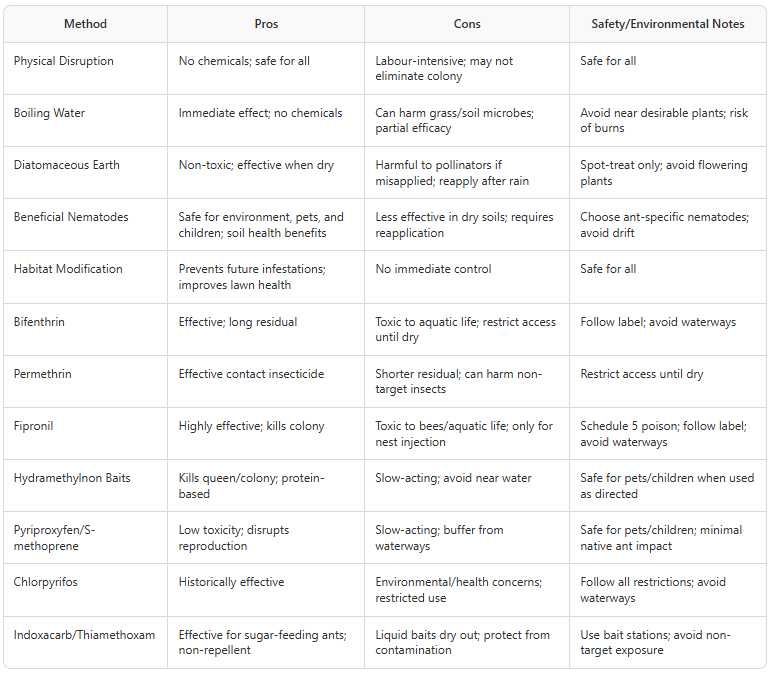
Summary Table: Pros and Cons of Key Ant Management Methods
The Business Owner’s Perspective and Conclusion
Living and working in the Top End means accepting ants as part of the landscape. They are a natural and important part of Darwin’s ecosystem, and in most cases, they do more good than harm.
Our professional approach is always to:
Identify the species first: Is it a beneficial native, a nuisance species, or a genuine pest/invasive?
Use non-chemical methods wherever possible: Prevention, early intervention, and habitat management are key
Reserve chemicals for severe infestations or invasive species: Always use APVMA-registered products and follow label instructions
Be vigilant about biosecurity: As a business that moves soil, plants, and equipment across Darwin, we take our responsibility to prevent the spread of invasive ants seriously. Always check for ant activity before moving material.
Encourage clients to report unusual ant sightings: Particularly any ants that don’t look like the usual suspects. The NT Government biosecurity hotline is there for a reason.
When in doubt, call a professional: Ant identification and targeted management is what we do, and getting it wrong with chemicals can cause more harm than the ants themselves.
Final Thought:
Ants are remarkable creatures. They have been engineering Darwin’s soils for millions of years. With knowledge, care, and the right management approach, you can have a beautiful, healthy lawn while living in harmony with your local ant community.
Frequently Asked Questions
Q: Should I try to eliminate all ants from my lawn?
A: No. Most ants are beneficial and play important roles in soil health and pest control. Focus on managing problem species and maintaining ecological balance.
Q: Are ant baits safe for pets and children?
A: Most modern granular baits (pyriproxyfen, hydramethylnon) are low risk when used as directed. Always follow label instructions and keep pets and children off treated areas until products have dried.
Q: What should I do if I find a new or unusual ant species?
A: Report it to the NT Government biosecurity hotline. Early detection is critical for preventing the spread of invasive species.
Need Help with Ants in Your Lawn?
If you’re struggling with ants in your Darwin, Palmerston or Humpty Doo lawn or garden, or just want professional advice on turf management, get in touch with us. We’re local experts with years of experience in the Top End’s unique environment.
Key Takeaway:
Ants are a fact of life in Darwin. With the right knowledge and management, you can enjoy the benefits they bring while minimizing the problems they cause. Don’t wage war on all ants—work with nature, and call in the professionals when you need a hand!
About Us
At Quality Garden Services NT, we’re passionate about healthy soils and vibrant landscapes in Darwin. From turf management and grounds maintenance to garden renovations and soil health advice, our expert team is here to help you achieve your green goals—no matter the season.
If you’re in Darwin, Palmerston, Humpty Doo or the rural areas and looking for reliable, trusted garden & grounds maintenance services, look no further than Quality Garden Services NT.
We specialize in turf management, grounds maintenance, and garden care in Darwin and the Northern Territory.
Contact us today (0498649535) to learn more about how wetting agents can transform your lawn!
At Quality Garden Services NT, we understand how important it is to maintain a lush, healthy lawn and vibrant garden in Darwin’s unique climate.
Why Choose Us?
Choosing the right grounds maintenance and gardening service is crucial for the health and appearance of your property. Here’s why we stand out:
Local Expertise: Our team is familiar with the unique climate and soil conditions of the Darwin, Palmerston, Humpty Doo and surrounding areas. We know what works best for your gardens and lawns.
Quality Service: We are committed to delivering high-quality work. Our goal is to exceed your expectations, leaving you with well-maintained outdoor spaces.
Customer Satisfaction: Your satisfaction is our priority. We take the time to listen to your needs and tailor our services accordingly - be it for commercial or private properties.
Thank you for visiting our website!