
El Niño 2026 – What Does That Mean for Darwin?
Quality Garden Services NT - Your trusted partner in creating lush, thriving outdoor spaces in the Northern Territory.
El Niño 2026 is shaping up to be one of the most significant climate events in recent years for Darwin and the Northern Territory. Expect hotter, drier conditions, delayed rains, and unique challenges for turf, gardens, and landscapes. Proactive, expert management is essential to keep your green spaces healthy and resilient.
Table of Contents
1) Introduction: El Niño 2026 – A Climate Event to Watch
2) What Is El Niño? Understanding the Science
3) El Niño 2026: The Current Status and Outlook
4) How El Niño Impacts Darwin’s Climate
Rainfall Reductions and Drought Risk
Delayed Monsoon Onset
Hotter Temperatures and Extreme Heat Days
Reduced Cyclone Activity
The Indian Ocean Dipole Factor
5) What This Means for Turf, Gardens, and Grounds in Darwin
Water Stress and Soil Moisture Depletion
Dormancy, Dieback, and Compaction
Pest and Disease Pressures
6) Practical Strategies for Resilient Turf and Gardens
Choosing the Right Turf Species
Smart Irrigation and Water Conservation
Soil Health Management
Mowing and Maintenance Adjustments
Pest and Disease Monitoring
Mulching and Water Harvesting
Post-Drought Recovery Planning
7) Water Conservation Guidance for Darwin
8) Conclusion: Partner with Local Experts for a Greener Darwin
Introduction: El Niño 2026 – A Climate Event to Watch
As a Darwin-based turf management, grounds, and garden maintenance business, we know that the weather isn’t just a topic for small talk—it’s the foundation of everything we do. In 2026, the climate conversation is dominated by one word: El Niño. This year’s event is not just a blip on the radar; it’s a powerful force that will shape the way we care for lawns, gardens, and landscapes across the Top End.
Whether you’re a homeowner, property manager, or business owner, understanding what El Niño 2026 means for Darwin is crucial. In this comprehensive guide, we’ll break down the science, the local impacts, and—most importantly—what you can do to keep your green spaces thriving in the face of challenging conditions.
What Is El Niño? Understanding the Science
El Niño is a naturally occurring climate phenomenon that originates in the tropical Pacific Ocean. It’s part of the broader El Niño–Southern Oscillation (ENSO) cycle, which alternates between El Niño (warm phase), La Niña (cool phase), and neutral conditions.
Key features of El Niño:
Warmer-than-average sea surface temperatures in the central and eastern Pacific.
Disrupted atmospheric circulation, altering global weather patterns.
Impacts felt worldwide, from droughts in Australia to floods in the Americas.
For Australia—and especially for northern regions like Darwin—El Niño typically means drier, hotter conditions and a higher risk of drought.
El Niño 2026: The Current Status and Outlook
The 2026 El Niño at a Glance
Active and strengthening: As of mid-2026, El Niño conditions are firmly established and intensifying.
Niño3.4 index: +1.24°C (well above the El Niño threshold of +0.80°C).
Probability: 80% chance of El Niño conditions through June–August, rising to 90% for the rest of the year.
Transition: Shifted from a weak La Niña in early 2026 to El Niño by May–June.
Expected strength: Moderate to strong, possibly very strong, peaking late 2026 and persisting into early 2027.
How El Niño Impacts Darwin’s Climate
Rainfall Reductions and Drought Risk
El Niño’s signature in Darwin:
Wet season rainfall deficits: Historically, El Niño years bring 20–40% less rainfall during the wet season (October–April).
Record dry spells: In 2015–16, Darwin Airport recorded its driest January–April period on record, with rainfall 41% below normal.
Drought risk: The Top End is particularly vulnerable to drought during strong El Niño events.
Key Finding:
If El Niño persists into the 2026–27 wet season, expect a high risk of below-average rainfall and potential drought conditions in Darwin.
Delayed Monsoon Onset
Typical delay: El Niño often delays the Australian monsoon by 2–6 weeks.
Impact: Shorter, weaker wet seasons mean less time for lawns and gardens to recover from the dry, and a longer period of water stress.
Historical example: In 2018–19, Darwin had its third-latest monsoon onset since 1957–58, coinciding with a drier than average wet season.
Hotter Temperatures and Extreme Heat Days
Above-average temperatures: El Niño years in Darwin are associated with mean temperatures up to +1.32°C above the long-term average.
Extreme heat days: The number of days above 35°C can be more than four times the long-term average during strong El Niño events.
Long-term trend: The number of days above 35°C at Darwin has more than doubled since 2000, with El Niño years contributing significantly.
Reduced Cyclone Activity
Fewer cyclones: El Niño years see a significant reduction in tropical cyclone numbers in the Australian region, including the Top End.
Landfall likelihood: Cyclones are about half as likely to cross the coast during El Niño years compared to neutral years.
2026 outlook: Expect below-average tropical cyclone activity for the 2026–27 season, with fewer and less intense cyclones likely to affect Darwin.
The Indian Ocean Dipole Factor
IOD status: The Indian Ocean Dipole (IOD) is currently neutral but may turn positive later in 2026.
Compounding effect: A positive IOD, combined with El Niño, can further suppress rainfall in northern Australia, increasing drought risk.
What This Means for Turf, Gardens, and Grounds in Darwin
Water Stress and Soil Moisture Depletion
Increased water loss: Higher temperatures and reduced rainfall mean turf and garden plants lose more water through evaporation and transpiration.
Soil moisture depletion: Sandy soils common in Darwin drain quickly and dry out fast, while clay soils can become hard and compacted.
Visible symptoms: Wilting, browning, and reduced growth are common, especially in shallow-rooted or poorly maintained lawns.
Dormancy, Dieback, and Compaction
Dormancy: Prolonged dry periods can cause turf to enter dormancy, with straw-coloured patches and slow recovery.
Dieback: Severe drought can lead to permanent turf loss, especially in high-traffic or poorly irrigated areas.
Soil compaction: Dry, hard soils reduce water infiltration and root growth, making lawns more vulnerable to stress.
Pest and Disease Pressures
Increased pest activity: Hot, dry conditions favour pests such as thrips, two-spotted spider mites, scale insects, aphids, and leaf beetles.
Stressed plants: Drought-stressed turf and gardens are more susceptible to pest infestations and opportunistic diseases.
Disease dynamics: While some fungal diseases decrease in dry weather, irrigation practices that wet foliage can still promote outbreaks.
Practical Strategies for Resilient Turf and Gardens
Choosing the Right Turf Species
Selecting drought-tolerant turf species is the foundation of a resilient landscape in Darwin’s climate.
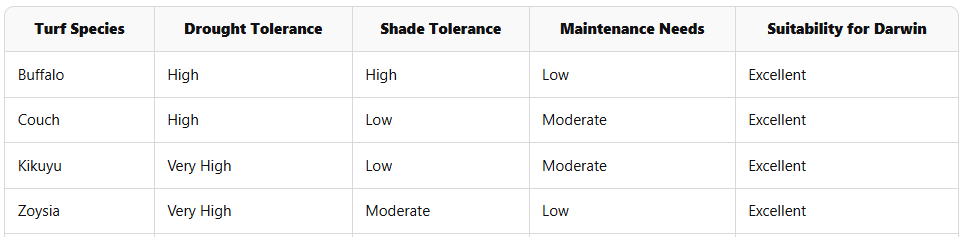
Buffalo Grass:
Durable, shade-tolerant, holds colour well in dry conditions.
Requires less mowing and fertilising.
Couch Grass (Green/Bermuda):
Excellent drought tolerance, quick recovery from wear, thrives in full sun.
Kikuyu Grass:
Vigorous, fast-growing, highly drought-hardy, ideal for high-use areas.
Zoysia Grass:
Premium drought tolerance, low water use, slow growth, good recovery.
Tip:
If you’re planning a new lawn or renovating an old one, now is the time to choose a drought-tolerant variety suited to Darwin’s unique conditions.
Smart Irrigation and Water Conservation
Efficient irrigation is critical during El Niño.
Water deeply and infrequently: Encourages deep root growth and improves drought resilience.
Optimal timing: Water early in the morning or late in the afternoon/evening to minimise evaporation.
Soil moisture monitoring: Use soil moisture meters to avoid unnecessary watering.
Smart irrigation systems: Automated controllers and drip irrigation systems improve efficiency and reduce water waste.
Routine checks: Regularly inspect irrigation systems for leaks, blockages, and misaligned sprinkler heads.
Water harvesting: Collect and use rainwater where feasible.
Soil Health Management
Healthy soil is the backbone of a resilient landscape.
Add organic matter: Compost, green manures, and mulches improve soil structure and water-holding capacity.
Aeration: Relieves compaction and improves water and air movement in the root zone.
Soil testing: Regular pH and nutrient analysis guides fertiliser and lime applications.
Slow-release fertilisers: Use organic or slow-release products to avoid nutrient leaching and provide steady nutrition.
Topdressing: Apply a thin layer of compost or sandy loam after aeration to further enhance soil health.
Mowing and Maintenance Adjustments
Mow high and less frequently: Reduces stress and encourages deeper rooting.
Avoid mowing during peak heat: Prevents additional stress on already vulnerable turf.
Limit traffic: Reduce foot and vehicle traffic on drought-stressed lawns to prevent further damage.
Spot treat weeds: Only spot-treat weeds during dormancy to minimise chemical use and avoid further stress.
Pest and Disease Monitoring
Regular monitoring: Hot, dry conditions can lead to rapid pest population increases.
Integrated pest management: Use targeted interventions and avoid blanket chemical applications.
Stressed plants: Pay extra attention to drought-stressed areas, which are more susceptible to pests and diseases.
Mulching and Water Harvesting
Mulch garden beds and around trees: Apply 5–10 cm of organic mulch to reduce evaporation, suppress weeds, and regulate soil temperature.
Water harvesting: Install rainwater tanks or barrels to supplement irrigation needs.
Post-Drought Recovery Planning
Fertilisation: After drought, use low-nitrogen, higher-potassium fertilisers to support root and stem recovery.
Renovation: If recovery is poor, plan for turf renovation or overseeding in the following wet season.
Water Conservation Guidance for Darwin
Current status: As of 2026, there are no formal water restrictions in Darwin, but water conservation is strongly encouraged.
General guidelines:
Water gardens and lawns efficiently.
Avoid watering hard surfaces.
Use water-saving technologies.
Potential for future restrictions: If drought persists or reservoir levels drop, restrictions may be introduced, such as limiting watering to certain days/times and prioritising essential uses.
Conclusion: Partner with Local Experts for a Greener Darwin
El Niño 2026 is a defining climate event for Darwin and the Northern Territory. The combination of reduced rainfall, delayed monsoon, hotter temperatures, and increased pest pressures presents real challenges for every lawn, garden, and landscape in our region.
But with the right strategies—drought-tolerant turf species, smart irrigation, soil health management, and proactive maintenance—your green spaces can not only survive but thrive, even in the toughest conditions.
Key Takeaway:
Don’t wait for the first signs of drought stress. Proactive, expert management is the key to resilient, beautiful landscapes during El Niño.
Need help preparing your property for El Niño 2026?
Our Darwin-based team specialises in turf management, grounds, and garden maintenance tailored to the unique challenges of the Top End. From soil testing and irrigation audits to turf renovation and pest management, we’re here to help you protect your investment and enjoy a greener, healthier landscape—rain or shine.
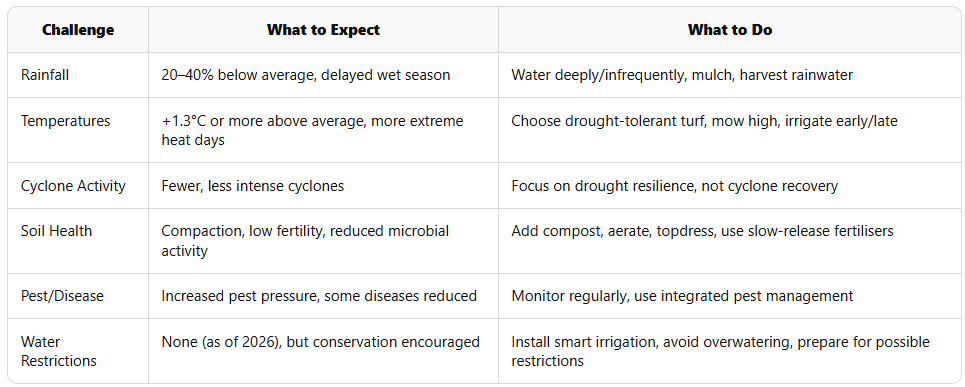
Summary Box: El Niño 2026 – What to Expect and What to Do
If you’re in Darwin, Palmerston, Humpty Doo or the rural areas and looking for reliable, trusted garden & grounds maintenance services, look no further than Quality Garden Services NT.
We specialize in turf management, grounds maintenance, and garden care in Darwin and the Northern Territory.
Contact us today (0498649535) to learn more about how wetting agents can transform your lawn!
At Quality Garden Services NT, we understand how important it is to maintain a lush, healthy lawn and vibrant garden in Darwin’s unique climate.
Why Choose Us?
Choosing the right grounds maintenance and gardening service is crucial for the health and appearance of your property. Here’s why we stand out:
Local Expertise: Our team is familiar with the unique climate and soil conditions of the Darwin, Palmerston, Humpty Doo and surrounding areas. We know what works best for your gardens and lawns.
Quality Service: We are committed to delivering high-quality work. Our goal is to exceed your expectations, leaving you with well-maintained outdoor spaces.
Customer Satisfaction: Your satisfaction is our priority. We take the time to listen to your needs and tailor our services accordingly - be it for commercial or private properties.
Thank you for visiting our website!